

























































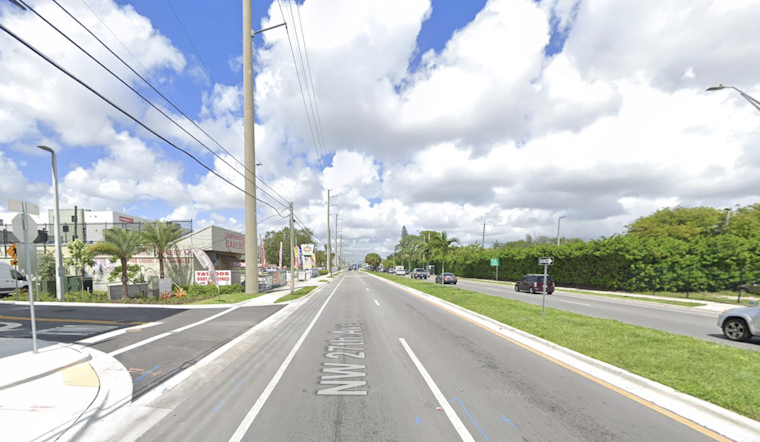
Demolition crews are already ripping into a 12-acre site in Miami's West Little River, clearing the way for The HueHub, a seven-tower complex pitched as one of the biggest plays yet under Florida's Live Local Act. The $880 million plan calls for roughly 4,000 fully furnished apartments and a long list of on-site services, from a two-acre public park to co-working, childcare and healthcare spaces. Developers are also leaning hard on transit access: the site is steps from the Northside Metrorail station and within walking distance of Tri-Rail connections, a density-and-amenities combo that is being framed as a new model for workforce housing in Miami.
As reported by South Florida Business Journal, work is underway at 8395 NW 27th Avenue and the developer says the project has moved into early construction stages. Industry tracker Traded also reports demolition has begun on the parcel, setting up a formal groundbreaking and phased vertical construction in the coming months.
What The Project Will Include
The HueHub is planned as seven 35-story towers with 4,032 apartments and roughly 200,000 square feet of interior amenities, according to planning filings and project materials. Rents outlined in the developer's marketing and local coverage start around $1,300 for studios, about $1,600 for one-bedrooms and roughly $1,900 for two-bedrooms, with many units aimed at households earning up to 120% of area median income. The master plan also includes street-level retail, a future on-site school, a police substation and built-in services such as apartment cleaning, dog walking and tutoring that are folded into the building program. These details are laid out in coverage by Florida YIMBY.
Who's Building It
Spanish developer Pablo Castro is leading the effort along with Miami consultant Laura Tauber, with Arquitectonica listed as architect and Coastal Construction set to serve as general contractor. Castro bought the 12-acre site in 2023 for about $29.3 million, and reports indicate the $880 million capital stack will combine equity with construction financing. Commercial Observer details the development team and financing background.
Why Miami Is Watching
Projects using Florida's Live Local Act trade denser entitlements and tax incentives for commitments to workforce-level rents, and HueHub ranks among the largest developments to lean on that framework. Legal analyses say the law provides tax breaks and flexibility on density, height and parking in exchange for reserving a significant share of units at rents tied to area median income. At the same time, Miami remains one of the most rent-stressed metros in the country, so large workforce projects are being closely watched for how affordable they actually are and what they mean for displacement on the ground. For more on how the law works, see analysis from Greenberg Traurig, and for local context see reporting on a Miami couple who works overtime just to keep a one-bedroom roof.
Timeline And What’s Next
The developer's marketing materials note that reservations opened in January 2026 for early signups. With demolition now underway, the team says it will move toward a formal groundbreaking and phased vertical construction. Industry watchers expect the next visible milestones to be the end of demolition, foundation work and then sequential tower framing, although actual delivery will depend on lender sign-offs and a steady construction timetable. If financing holds and the planned modular construction sequencing stays on track, the buildout could move faster than a traditional high-rise schedule, but the size of the project still makes this a multi-year effort. For ongoing updates, see the project site The HueHub and recent industry reporting from Traded.
"We don't want to do these white buildings with small windows and make people live in a simple way," developer Pablo Castro told The Real Deal when describing the project's design approach. If it is completed as planned, HueHub will be a major test of whether large, amenity-rich workforce housing can really be delivered at scale in Miami and whether the Live Local Act's incentives translate into the long-term affordability advocates say the city needs. Neighbors, local officials and investors will be watching as demolition gives way to a multiyear buildout.





