

























































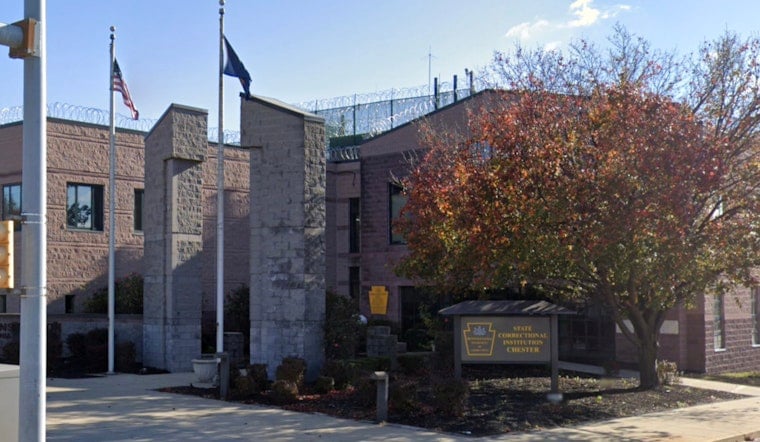
Tucked inside the State Correctional Institution at Chester is a 64-bed pilot unit with a big reputation. Little Scandinavia is being held up as a blueprint for running prisons in a calmer, less violent way that focuses heavily on preparing people for life after release. Early results and a national report have state officials talking about taking the concept statewide, even as corrections officers warn about safety risks and contraband.
Early results and a national report
A January 2026 report from the Brennan Center for Justice found that Little Scandinavia recorded “almost no” violence in 2024, even as Pennsylvania’s state prisons saw about a 21.6% increase in violent incidents that same year, according to Brennan Center for Justice. The report also warns that without reforms, a large share of people released in recent years are likely to be rearrested within five years. It highlights Little Scandinavia as one of several unit-level experiments that could cut in-prison harm and improve reentry outcomes if they are scaled up and properly funded.
How the unit works
The 64-bed Little Scandinavia unit is intentionally designed to feel less like a traditional cell block and more like a compact residential neighborhood. Residents live in single rooms, share a fully equipped kitchen, order groceries, use tablets and exercise equipment, and move through indoor and outdoor common areas. Staff assigned to the unit are trained to behave more like counselors than guards, focusing on building relationships, connecting people to services, and resolving conflicts through conversation instead of strict punishment. Those program features and goals are detailed by the research team behind the effort, according to Scandinavian Prison Project.
State plans to scale the model
Top officials at the Pennsylvania Department of Corrections have told lawmakers they want to export the concept to other facilities, including SCI Cambridge Springs, SCI Smithfield, and SCI Fayette, as reported by The Philadelphia Inquirer. In budget testimony, the department has also stressed that reducing recidivism is a central priority, noting that the state’s three-year recidivism rate stood at 57% in 2025, per Pennsylvania Department of Corrections budget testimony.
Research and who is watching
“We’re trying to understand how Little Scandinavia is different for the people who live and work there,” Drexel criminology professor Jordan Hyatt said of the project, and Drexel researchers lead much of the evaluation. An international research team that includes scholars and analysts from Drexel, the University of Pennsylvania, Villanova, and the University of Oslo is gathering climate surveys, administrative data, and interviews to track both safety inside the unit and outcomes after release, according to Drexel University.
Union concerns and safety tradeoffs
The approach is far from universally embraced. The Pennsylvania State Corrections Officers Association has warned that adding Scandinavian-style units could make it harder to keep drugs and other contraband out of prisons, and some staff argue that those tradeoffs need close scrutiny as the model expands, according to reporting by Axios Philadelphia. Supporters counter that the privileges and calmer environment inside Little Scandinavia give residents a strong incentive not to jeopardize what they have.
Costs, funding and politics
Turning older housing units into something resembling the Scandinavian model does not come cheap. The Inquirer has reported that each conversion costs roughly $310,000 per site, and the research and early rollout have leaned on private funding. The Scandinavian Prison Project and Drexel both list Arnold Ventures as one of the funders supporting evaluation and implementation work, according to The Philadelphia Inquirer. Those dollars are crucial, since serious scaling would require more training, staffing changes, and physical upgrades than just fresh paint and new furniture.
What to watch next
Researchers caution that the evidence so far is only a first glimpse. Low incident counts in a 64-bed unit are promising, but only longer-term follow up and tracking after release will reveal whether Little Scandinavia actually reduces rearrest. The Brennan Center argues that small-scale unit projects need to be paired with broader policy investments if states truly want to bring recidivism down, according to Brennan Center for Justice. State officials expect more analysis in the coming year before deciding whether this Chester experiment should become a model for other prisons across Pennsylvania and beyond.
For people in the Philadelphia area, the pilot surfaces a blunt question: can a kinder, more normalized prison environment actually make communities safer once people come home. Advocates, staff, and policymakers will be watching closely to see whether the relative calm inside SCI Chester can hold up in larger or higher-security prisons and whether this model can really bend the reentry curve.





