

























































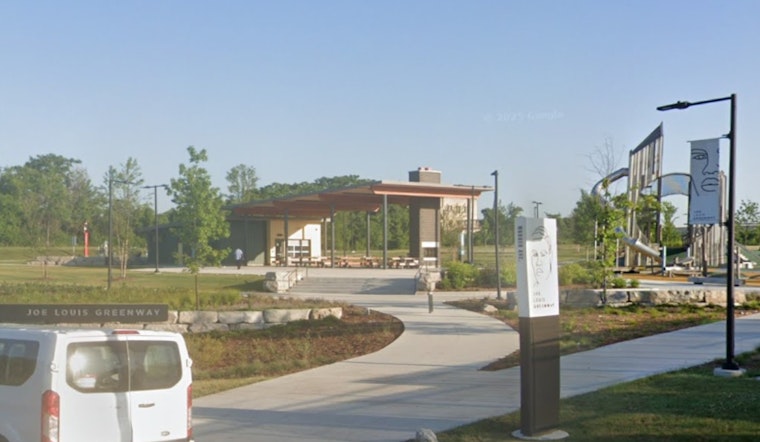
The Joe Louis Greenway, Detroit’s long-running effort to stitch nearly 30 miles of bike and walking paths through neighborhoods, is shaping up to be more than a network of routes, murals and trailheads. New reporting suggests the trail could bring a meaningful bump in home values for owners who live near the route, turning regular sidewalks into unexpected equity. That possibility has residents and city leaders weighing the upside for long-time homeowners against the familiar risks that come with rising property prices.
As reported by Crain's Detroit Business, a new analysis uses the Joe Louis Greenway Neighborhood Planning Study to estimate how property values could shift for houses inside the greenway’s planning area. The planning study looked at properties roughly a half mile from the route and pairs those projected value effects with recommended policies such as homeowner stabilization, affordable-housing preservation and small-business supports, an attempt to steer benefits toward existing residents as detailed by the City of Detroit.
What the research says about greenways and property values
Evidence from U.S. studies is mixed but generally leans positive. Hedonic pricing research finds that well-used, well-connected trails often add a measurable premium to nearby home values, although the size of the bump depends heavily on neighborhood context and trail quality. A 2004 analysis in the Journal of Park and Recreation Administration reported positive impacts for some Indianapolis greenways, and a synthesis of trail research summarized by Headwaters Economics shows the biggest premiums tend to show up along destination and amenity-rich corridors. That body of work suggests the JLG’s scale and its connections, linking parks, the riverfront and nearby cities, give it a stronger shot at creating a local premium than smaller neighborhood paths.
Money and momentum
The greenway has already attracted substantial public and private backing. The city says it has raised more than $200 million for the project, including a $10.5 million federal ATIIP grant that is earmarked for a one-mile section between Woodward and Dequindre. In a city announcement, JLG Partnership Executive Director Leona Medley called the $10.5 million “a transformative investment,” and officials say work on the Woodward to Dequindre segment is scheduled to begin in late 2026, according to the City of Detroit.
Equity questions and local responses
Large price gains can sharpen tensions as quickly as they build equity. A University of Michigan analysis, highlighted by the Metro Times, shows Detroit homeowners captured billions in equity in recent years, a reminder that localized value shifts can translate into real household wealth. At the same time, scholarship warns that green-space investments sometimes speed up displacement in particular neighborhoods. A 2022 case study in Sustainability finds that outcomes vary widely by local context. Community funders and advocates are already trying to blunt that risk. Recent reporting on a Rocket Community Fund award describes pilots for home repair and a “house-swap” program intended to help long-time residents stay put, according to the Michigan Chronicle.
For homeowners who live near the route, the takeaway is straightforward. The greenway could be a rare chance to convert neighborhood amenities into household equity, but whether that wealth sticks with long-time Detroiters will depend on the city’s follow-through and how local pilot programs perform. Homeowners may want to keep an eye on city playbooks, grant pilots and the public-meeting calendar. The Joe Louis Greenway Partnership keeps a running list of updates and events on its site at the Joe Louis Greenway Partnership.





