

























































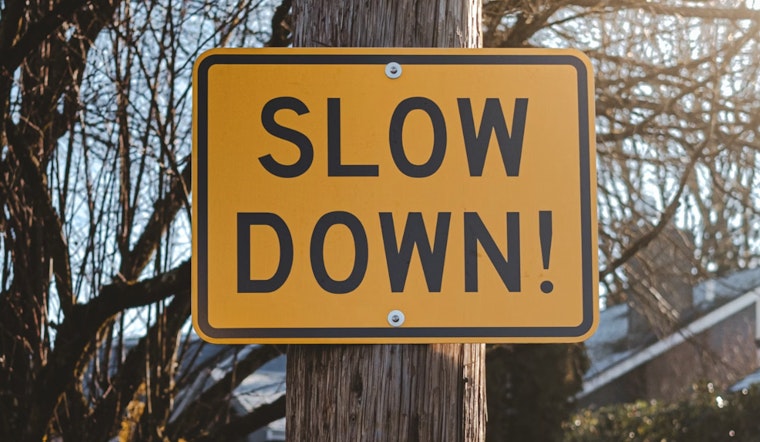
St. Louis is putting drivers on notice. City and county leaders on Wednesday rolled out a sweeping regional crackdown on reckless driving, pairing tougher enforcement with a loud, highly visible “slow down” message aimed straight at local streets.
More than 65 police chiefs, law-enforcement leaders and community groups packed into the Urban League of Metropolitan St. Louis for the announcement. The plan leans on stepped-up traffic patrols, billboards, thousands of yard signs and quick-hit safety fixes on problem roads, all in response to a spike in pedestrian deaths and a stubbornly high number of traffic fatalities on both sides of the city–county line.
The Urban League has already planted roughly 5,000 “Slow Down” yard signs around St. Louis and is teaming up with charter schools and neighborhood organizations to keep pushing the message deeper into communities. James Clark, the Urban League’s vice president for public safety, said the signs are prompting drivers to check their speed and rethink risky habits. The early momentum and partnerships behind the effort were highlighted by KMOV.
Officials point to last year's spike in pedestrian deaths
Officials said 2024 was the deadliest year on record for pedestrians in both the city and the county, and that St. Louis typically sees about 50 traffic deaths a year. St. Louis Metropolitan Police Chief Robert Tracy, who spoke at the briefing, said more than half of those fatalities last year were tied to excessive speeding.
One key focus is Gravois Avenue, which officials say saw 69 crashes in 2024. St. Louis County has already adopted a resolution backing “quick-build” safety improvements and reduced speed limits along that corridor, according to FOX2.
What the crackdown will do
Agencies outlined a three-part push: tougher enforcement, aggressive public education and short-term engineering changes designed to curb the worst driving behavior as fast as possible.
“One accident that kills one person can affect literally hundreds,” Laura Keys told the crowd, a reminder officials used to underline why they say the region cannot afford to wait. Leaders said the multi-agency partnership will ramp up enforcement and public-awareness work in the coming months, with thousands more signs and billboards and coordinated traffic details across local departments, per FOX2.
What drivers should expect
For everyday motorists, the changes will be hard to miss. Drivers can expect more visible patrols on known trouble corridors and targeted enforcement during peak hours and big community events. Short-term “quick-build” measures such as fresh striping, new signage and temporary lane adjustments will roll out alongside neighborhood-focused education campaigns.
Officials said they will track the results, watching crash and injury numbers over time and adjusting the strategy if needed. They also promised to report back to neighborhoods as enforcement and street changes come online.
Still, leaders stressed that no amount of patrol cars or yard signs can fix the problem without drivers buying in. The immediate ask is simple and local: slow down. The signs are up, the billboards are coming, and drivers can expect to see more officers out there reminding them of exactly that.




