

























































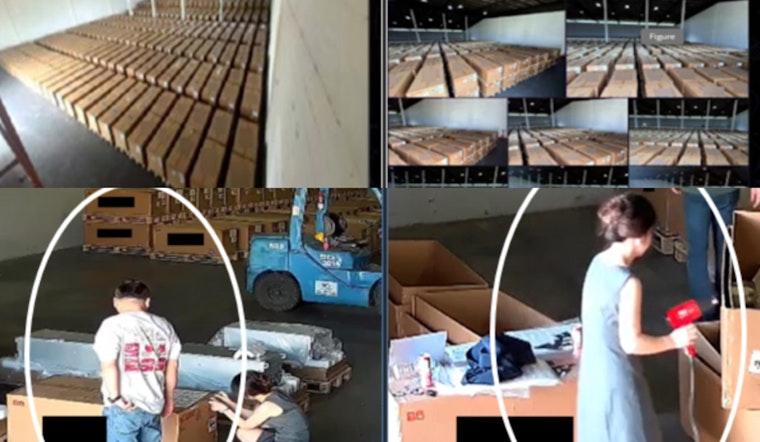
Federal prosecutors in Manhattan have unsealed an indictment that accuses three men of quietly steering billions of dollars’ worth of U.S.-built servers loaded with advanced AI chips to China, sidestepping federal export controls in the process.
The indictment names Yih-Shyan “Wally” Liaw, Ruei-Tsang “Steven” Chang and Ting-Wei “Willy” Sun. Prosecutors say Liaw and Sun were arrested and presented in the Northern District of California, while Chang remains a fugitive. According to the charging documents, the alleged conspiracy relied on shell purchase orders, sham audits and staged "dummy" servers to hide shipments, with prosecutors alleging approximately $2.5 billion in purchases by a single Southeast Asian intermediary and at least $510 million in servers ultimately shipped to China during a five-week span in 2025.
“They did so through a tangled web of lies, obfuscation, and concealment,” U.S. Attorney Jay Clayton wrote in a statement about the case. The U.S. Attorney’s Office for the Southern District of New York says the defendants allegedly staged fake equipment, doctored end-user documents and used a pass-through company to conceal the true customers. The indictment was unsealed in Manhattan, and the matter has been assigned to U.S. District Judge Edgardo Ramos.
How prosecutors say the scheme worked
According to the indictment, the three defendants directed executives at a Southeast Asian buyer labeled “Company-1” to place large orders for servers that were often assembled in the United States and routed through Taiwan before being repackaged and shipped to China. Prosecutors allege the group used a logistics provider to move the gear in unmarked boxes, and that agents on the ground even staged thousands of non-working “dummy” servers during compliance audits to fool the U.S. manufacturer’s oversight teams.
Public filings show Yih-Shyan (Wally) Liaw is a co-founder and senior vice president of business development at Super Micro Computer, Inc., and that he sits on its board. The company’s 2025 Form 10-K from Super Micro Computer lists his title and board role.
Why export controls matter
Advanced AI accelerator chips and the servers that house them fall under U.S. export licensing rules because they have potential military and other dual-use applications. That is why shipments to China often require Commerce Department approval, and why prosecutors say allegedly routing this kind of hardware around the rules is treated as a national security issue, not just a paperwork problem.
The Bureau of Industry and Security last month revised its license-review policy for certain semiconductors to tighten oversight of shipments to China, a shift that helps explain the aggressive posture on diversion cases. The Bureau of Industry and Security summarized the policy change in January 2026.
What’s next
The indictment charges each defendant with conspiring to violate the Export Controls Reform Act, a count that carries a maximum sentence of 20 years in prison, as well as conspiring to smuggle goods from the United States and conspiring to defraud the United States, each of which carries a maximum sentence of five years, according to prosecutors.
Liaw, 71, and Sun, 44, were arrested and presented in the Northern District of California and are expected to be transferred for further proceedings in Manhattan. Chang, 53, remains a fugitive. The U.S. Attorney’s Office said the FBI and the Department of Commerce assisted in the investigation as the case moves toward arraignment and pretrial proceedings.




