

























































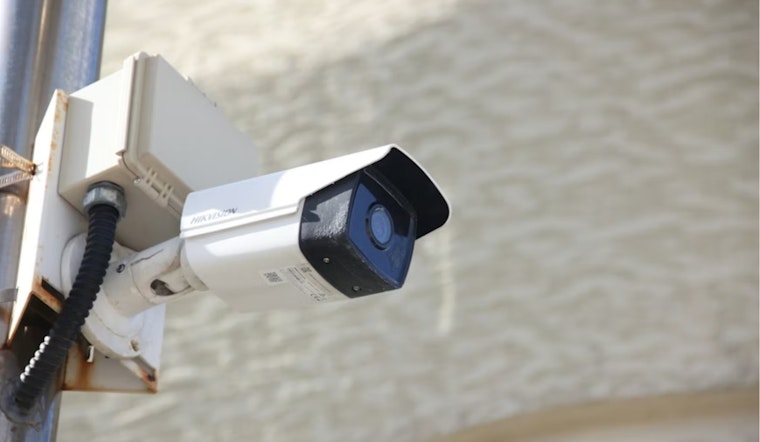
An interactive map published this week lays out, in unusually stark detail, how a growing web of AI-powered cameras tracks everyday trips across San Francisco. Built from publicly reported device locations, the tool shows how a single commute can run past dozens of license plate readers and people-tracking cameras. For many Bay Area drivers and transit riders, the city’s surveillance network is no longer an abstract policy fight. It is literally on the way to work.
How the map was made
According to The San Francisco Standard, the route tool relies on location reports compiled by Deflock, a crowd-sourced project that logs automated license plate readers and other camera locations. The Standard narrowed that dataset to Flock devices in and around the Bay Area, then layered Apple Maps routing on top so users can plug in a trip and see how many cameras sit along the way.
How many Flock cameras are in the city?
City records indicate the network is sizable, but far from evenly spread. The SFPD’s 2024 automated license plate reader report states the department had roughly 300 fixed ALPR cameras running and expected total deployment to reach 400, according to the San Francisco Police Department. That rollout has clustered cameras along eastern neighborhoods and major routes, creating denser coverage in SoMa, the Mission and other busy transit corridors.
What Flock says about its cameras
Flock Safety, the Atlanta-based company behind the devices, pitches its hardware as a mix of license plate readers and AI-assisted cameras that provide what it calls “objective evidence” to police and neighborhood clients. As described by Flock Safety, the plate readers automatically log license numbers, while other units supply high-resolution, machine-assisted video that investigators can search later.
Reports of sharing and scrutiny
Once that data is collected, who gets to use it has become a central point of controversy. Reporting from 404 Media described logs showing searches linked to federal immigration and other agencies. At the same time, experts have questioned whether camera expansions alone explain reported drops in crime, as highlighted in coverage from WIRED. Together, those findings have helped spur audits, city council hearings and fresh demands for tighter oversight across the Bay Area.
Local backlash and legal fights
Some local governments are already pushing back. In Mountain View, the police chief moved this winter to shut off the city’s Flock ALPRs after an internal audit found external access had occurred, the office said in a public statement on the City of Mountain View site. And in Oakland, privacy nonprofit Secure Justice has sued the city, arguing the police department illegally shared ALPR data with federal agencies, according to reporting by The San Francisco Standard.
Security holes and vandalism
The cameras themselves have not been immune to trouble. A December probe by 404 Media found Condor pan-tilt-zoom cameras exposed on the open internet, allowing outside access. Industry coverage has also tallied dozens of Flock units that were vandalized or torn down during public protests. Those incidents have fed skepticism about the systems and sharpened questions about both security practices and vendor accountability.
What commuters can do
For regular commuters, the route map offers a quick, visual sense of how much surveillance sits along a given path. Separate from that, municipal transparency portals outline which agencies can tap local ALPR data. In San Francisco, Flock’s city transparency page lists device counts and authorized users, while local police department policies spell out retention rules, access procedures and audit practices. Community groups and privacy advocates argue that routine audits and public reporting are still the most practical tools residents have to follow how these systems are used.
The legal note
California law sets boundaries on how ALPR records can be shared. Under state guidance and statutes commonly associated with SB 34, agencies are not supposed to routinely pass license plate data to out-of-state or federal entities without appropriate legal process, a pattern described in reporting from CalMatters. That framework is driving enforcement efforts and courtroom battles, and it now sits at the center of how cities decide whether to keep, pause or terminate surveillance vendor contracts.
The San Francisco Standard tool does not settle those policy arguments, but it does give San Franciscans a direct way to gauge a surveillance system that has already reshaped policing and public debate. For anyone uneasy about being constantly logged, the map and city transparency portals are the clearest starting points to see what is watching along the daily commute.




