

























































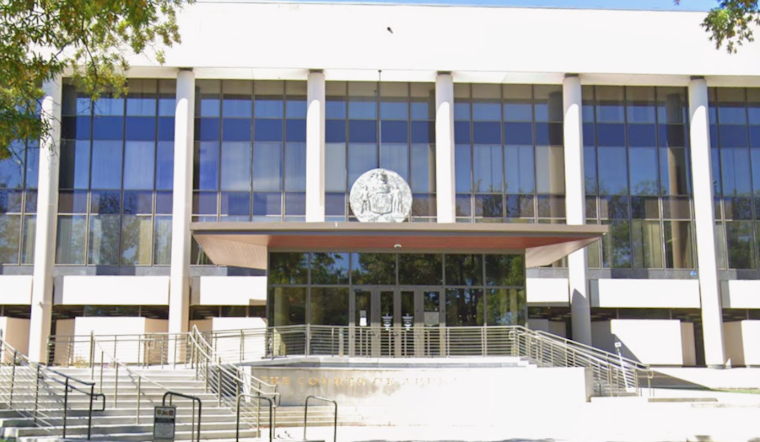
Maryland’s Supreme Court has drawn a hard line on how far cities can stretch public-nuisance law, and Baltimore’s landmark opioid verdict could be caught in the crosshairs.
Today, the high court refused to extend the common-law doctrine of public nuisance to claims tied to the licensed dispensing of prescription opioids. That single move undercuts one of the few legal theories cities have leaned on to make drug companies help pay for treatment, housing, and other abatement efforts. For Baltimore, which won a $266 million jury verdict in 2024 that a judge later cut to about $152 million, the ruling throws fresh uncertainty over how much of that money will ultimately stick as the case winds through appeals.
As reported by The Banner, the court was answering a certified question from a related lawsuit when it held that the licensed dispensing of, or administration of benefit plans for, a controlled substance does not amount to an actionable public nuisance under Maryland common law. The majority conceded the universally recognized concerns related to the opioid epidemic, but, according to the outlet’s reporting, said decisions about how to address those concerns belong to lawmakers and regulators, not judges stretching nuisance doctrine to cover new territory.
Why This Matters For Baltimore
Baltimore’s high-profile case went after distributors McKesson and AmerisourceBergen (now Cencora), alleging they flooded the city with prescription opioids while ignoring obvious warning signs. A jury sided with the city and returned a $266 million award in November 2024, according to the city’s trial team. A judge later pared back parts of that verdict, and the city agreed to accept roughly $152 million while it presses ahead with appeals. Susman Godfrey recounted the verdict, and CBS Baltimore detailed the post-trial reduction and the city’s decision to accept a smaller judgment while the legal fight continues.
How The Case Reached The State High Court
The dispute landed at Maryland’s high court after a federal judge, handling an Anne Arundel County lawsuit that targets pharmacy benefit managers and distributors, sent over specific legal questions. The judge asked whether licensed dispensing or administration of benefit plans for controlled substances could support a public-nuisance claim. The court’s docket reflects that the justices accepted those certified questions, and a stack of amicus briefs from industry groups and local governments urged sharply different answers. The pending-cases list on the Maryland Courts website tracks the matter, while Conduit Street reported on the arguments that set the stage for this week’s opinion.
Legal Fork In The Road
Maryland’s stance now sits alongside appellate rulings in other places that have allowed similar nuisance theories to move forward. In a notable Fourth Circuit decision, the appeals court held that municipal plaintiffs in West Virginia could pursue public-nuisance claims tied to the over-distribution of opioids, as summarized by Justia. That growing split in how courts read nuisance law adds another layer of uncertainty for cities and counties deciding whether to keep rolling the dice on individual trials or retreat to nationwide settlement frameworks.
City Hall Responds
City officials say they are not backing off. In a statement to The Banner, spokesperson Tracy King stressed that “the city’s judgment against distributors McKesson and AmerisourceBergen following a successful jury trial remains on appeal, and the city will continue to defend the judgment.” Leaders at City Hall also point out that settlement dollars already in hand have been earmarked for overdose response and other abatement programs, even as the bigger legal picture shifts around them.
What Comes Next
The ruling all but guarantees more litigation. Baltimore will keep pressing its appeals, while other jurisdictions watch closely and decide whether to pursue public-nuisance claims of their own or lean into settlement talks. At trial, federal dispensing data showed that roughly half a billion opioid pills were shipped to Baltimore City and County between 2006 and 2019, a statistic highlighted in local coverage of the case. CBS Baltimore has tracked the city’s verdict, and national reporting on broader opioid settlements, including coverage by The Philadelphia Inquirer on the multistate settlement framework, shows how the fight keeps bouncing between courtroom showdowns, appellate briefs, and negotiated deals.
Legal observers say the real-world consequences will unfold over months of additional briefing and rulings. If higher courts narrow or unwind Baltimore’s judgment, the dollars local officials have been counting on for treatment, harm-reduction work, and related services could be delayed or reduced. For families who have lost loved ones to overdose, the outcome will register less as an abstract legal doctrine and more as a question of whether help actually reaches their neighborhoods.





