

























































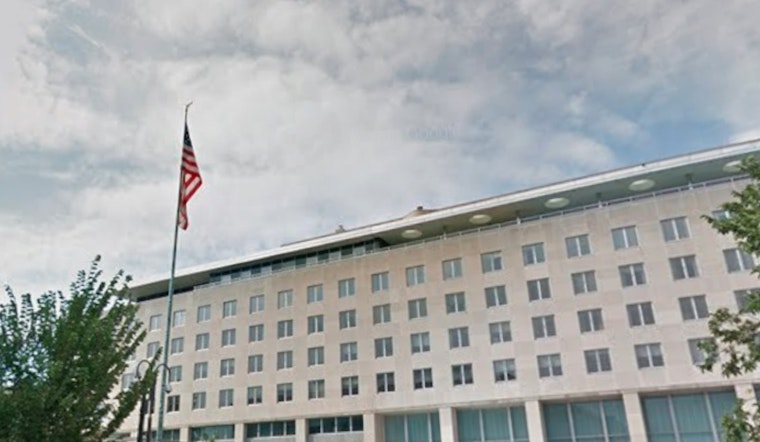
The State Department is rolling out a new web of 12 regional disaster-response hubs, a global network meant to coordinate emergency humanitarian aid and cut the lag time in fast-moving crises. The hubs will sit under a newly created Bureau of Disaster and Humanitarian Response in Washington, which is supposed to centralize decisions and tighten control of operations on the ground.
Where the hubs will be
The new regional posts will be located in Miami; Bogotá, Colombia; Guatemala City; Santo Domingo, the Dominican Republic; Kyiv; Amman; Addis Ababa; Nairobi; Dakar; Bangkok; Dhaka; and Manila, according to the San Francisco Chronicle. The bureau itself will be based in Washington with roughly 200 staffers, while the hubs are expected to handle much of the field work for rapid response.
A major reorganization
The announcement lands after the Trump administration’s move to dismantle the U.S. Agency for International Development, a change critics say hollowed out field capacity that had been built over decades. Aid groups and some members of Congress have warned that folding USAID functions into the State Department could slow responses and complicate long-standing partnerships, according to reporting by the Associated Press.
Funding and multilateral pivot
In December the administration pledged 2 billion dollars to the U.N. Office for the Coordination of Humanitarian Affairs as part of a broader plan to route more assistance through multilateral channels, according to the AP. Jeremy Lewin, the State Department official overseeing foreign assistance, warned that “The piggy bank is not open to organizations that just want to return to the old system.” The pledge signals a consolidation of U.S. emergency aid at the same time overall foreign-aid spending has been sharply reduced.
Why experts are uneasy
Humanitarian specialists point out that USAID’s Bureau for Humanitarian Assistance has historically led U.S. disaster operations, keeping logistics, procurement and deep NGO relationships under one roof. The Foreign Affairs Manual lays out how USAID and the State Department coordinate on disaster aid, and analysts say reworking that structure raises practical questions about supply chains, contracting and how quickly surge teams can be deployed.
What to watch next
The new bureau’s real power will come down to staffing levels, budget lines and how easily embassies and relief organizations adjust to new chains of command. Observers say Congress may call for detailed briefings, and humanitarian groups will be watching how contracts and field teams are shifted, especially in the Caribbean and Latin America where the Miami hub sits at the crossroads.
For now, the plan rewrites how Washington says it will answer hurricanes, floods and conflict-driven emergencies. The proof will come with the next major disaster, when those 12 hubs are under pressure to move supplies, people and money on deadline, and show whether consolidation speeds life-saving help or tangles it in a new layer of bureaucracy.


