

























































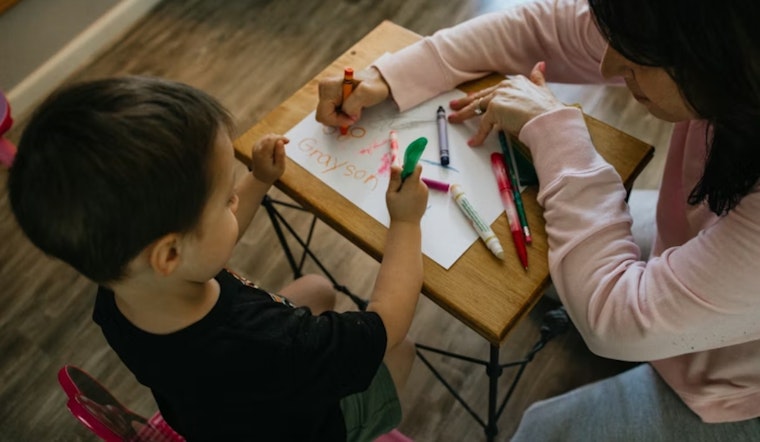
Monthly $300 pay boosts are finally landing in the bank accounts of Michigan’s early-childhood educators, giving a modest but tangible raise to a workforce long hit by low wages and constant turnover. Roughly 2,500 early‑childhood educators are set to receive these new wage supplements as part of a $16 million state pilot that kicked off last November. Payments began this month after the program cleared its regional matching requirements, and state officials say the pilot will run through September 30, 2027 to test whether predictable extra cash keeps teachers in their jobs.
Regional coalitions are now handling the on‑the‑ground rollout, and local administrators say workers are already noticing the difference. As reported by 9&10 News, the initiative now reaches more than 2,500 providers across the state and began issuing payments in early March. Officials told reporters that once coalitions met their match requirements, it unlocked the broader rollout and let each region steer funds toward its most acute staffing shortages.
How the wage pilot works
According to a November MiLEAP press release, the Early Childhood Educator Wage Initiative offers monthly supplements of $300 for full‑time teachers and assistant teachers and $200 for part‑time staff. The $16 million in state school‑aid funds is administered by MiLEAP and the Gogebic‑Ontonagon Intermediate School District, with technical support from the Early Childhood Investment Corporation. Each of Michigan’s 10 Regional Child Care Coalitions was eligible for up to $1.6 million in state match funds to turn into local stipends.
Regional rollout and priorities
Each region created its own selection rubric, with most putting a thumb on the scale for programs in understaffed areas, infant‑toddler classrooms and providers serving low‑income families. Many coalitions used weighted lotteries to decide who got in, a way to juggle high demand with limited dollars.
The program’s administration partner, Child Care Back Office, spells out the fine print: eligibility rules, MiRegistry documentation requirements and how those lotteries are prioritized. It also notes that the stipends are taxable income and will be reported on 1099‑MISC forms. Coalitions are expected to draft sustainability plans and chase additional public‑private funding if they hope to keep these checks flowing after the pilot ends.
Local impact in Jackson County
At Early Impressions Preschool and Childcare in Jackson County, which serves about 700 children and employs roughly 125 people, only six staffers were selected for the new supplements, but the impact is already personal. Teachers there say the extra money is easing immediate financial pressure.
One recipient told the Detroit Free Press the payment was “very uplifting” and helped cover essentials like car insurance and tuition. Director Angela Mentink said she wants the state to expand the program so more of her employees can afford to stay in the field instead of cycling out for slightly better‑paying work elsewhere.
What the research says
Michigan is not flying blind here. Evidence from other places suggests that small but steady wage boosts can help keep early‑childhood educators in their jobs, lower stress and improve morale. The Center for the Study of Child Care Employment highlights a Mathematica evaluation of Washington, D.C.’s approach, which paired wage supports with other benefits. That package was linked to about a 7 percent increase in early‑care employment over two years and reported gains in educator well‑being.
Michigan’s pilot is designed to gather similar data on retention and workforce stability, with the goal of giving lawmakers real numbers to point to when they decide what, if anything, comes next.
Next steps and sustainability
MiLEAP says coalitions will collect and report evaluation data throughout the pilot, but the $16 million allocation only funds stipends through September 2027. The state press release makes clear that regions are responsible for raising matching dollars and crafting sustainability plans, and reporting so far indicates Governor Gretchen Whitmer’s current budget proposal does not include money to make these wage bumps permanent, according to the Detroit Free Press.
Advocates say if the pilot ultimately shows stronger retention and a more stable workforce, the findings will increase pressure on state lawmakers and local funders to find long‑term dollars. For now, the checks are a concrete, if temporary, lifeline for educators who are trying to keep classrooms running while their own budgets barely pencil out. Providers and advocates alike say the real test will be whether the data show lasting gains and whether policymakers are willing to step up once the grant window closes.





