

























































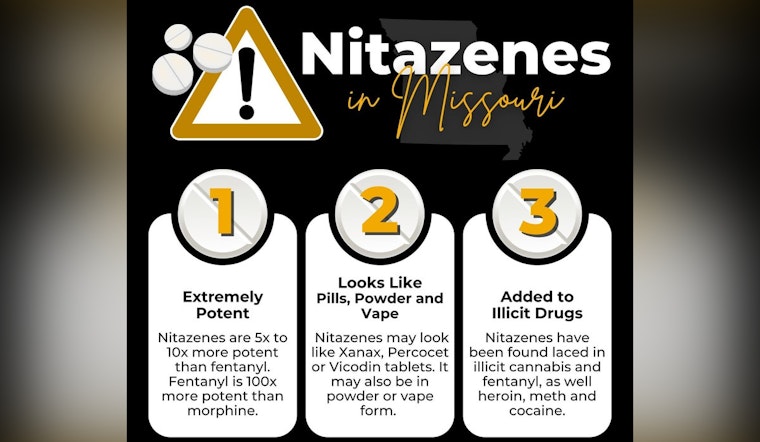
State health officials and the Missouri State Highway Patrol on Wednesday rolled out blunt new warnings about ultra‑potent synthetic opioids known as nitazenes, saying they are popping up in Missouri's drug supply and that everyday bystanders need to know exactly what to do if someone suddenly goes unresponsive. The agencies pushed out a series of graphics on social media that boil down practical, step‑by‑step instructions on checking a person, using naloxone, and giving rescue breaths into quick, shareable posts. Officials stress that moving fast can save a life, since some of these newer opioids are stronger than fentanyl and may require repeated doses of the antidote.
The Missouri State Highway Patrol shared the images on Facebook and said the materials came from the Missouri Department of Health and Senior Services. The graphics walk non‑medically trained people through what to do if they find someone who will not wake up. The guidance urges people to try to rouse the person first by checking, shaking, and shouting, then using firm pressure with the knuckles on the breastbone for up to 10 seconds. If there is still no response, it tells bystanders to call 911 right away and give naloxone if they have it. The warning notes that nitazenes can be disguised as familiar pills such as Xanax or Percocet, or show up as powders or vape cartridges, which raises the risk that people take them without realizing it. According to Missouri State Highway Patrol, bystanders should keep giving rescue breaths or CPR until emergency crews arrive and take over.
What Are Nitazenes And Why They're Dangerous
Nitazenes are a group of synthetic opioids that toxicologists say can be far more potent than fentanyl, and public health agencies have documented fatal overdoses linked to these drugs. Federal health officials have reported deaths involving nitazenes and warned that some versions are much stronger than fentanyl, which means multiple doses of naloxone may be needed to pull someone out of an overdose. International monitors have also tracked nitazenes showing up in seized pills, powders, and even in products that are not marketed as opioids at all, which makes them hard to spot in the street supply. See the UNODC and the CDC for more on global trends and risks.
How To Use Naloxone And Give Rescue Breaths
Missouri's statewide standing order instructs people to call 911 first, then give one full naloxone nasal spray dose into a single nostril, wait 2–3 minutes, and repeat as needed until the person responds. The guidance from the health department and the product instructions explain that each sealed nasal device contains a single 4 mg dose. It should be used by peeling back the tab, inserting the nozzle fully into one nostril, and pressing the plunger. The device is used as is, without priming it beforehand.
If the person is not breathing, the instructions say rescuers should tilt the head back, pinch the nose closed, give two slow breaths, then continue with one breath every five seconds until the person starts breathing on their own or emergency medical services arrive. Per the FDA/NARCAN guidance and the Missouri DHSS standing order, it is safe to give additional naloxone doses when someone does not wake up.
Legal Protections When You Call
Missouri law offers limited immunity for people who, in good faith, call for medical help when someone appears to be overdosing. RSMo §195.205 says callers and overdose victims cannot be arrested, charged, or otherwise penalized for certain minor drug offenses when the evidence comes to light only because they sought help. Courts have applied that protection in specific cases and also pointed out that it has boundaries, so officials emphasize that callers should follow dispatcher instructions and cooperate with first responders. According to the Revised Statutes of Missouri and Missouri appellate summaries, immunity is not automatic and depends on the facts of each situation.
Where To Get Naloxone And Training
The health department's standing order points people to the state portal GetMissouriNaloxone.com and instructs pharmacies and community programs to provide naloxone to individuals at risk of overdose and to their friends and family members. Across the state, many local health departments and harm reduction organizations also hand out free naloxone kits and offer short, hands‑on training sessions so people can practice giving naloxone and rescue breaths before an emergency happens. The standing order includes a list of treatment providers and local contacts that help distribute naloxone in Missouri communities. See the Missouri DHSS standing order for links and local resources.
If you find someone who is unresponsive, the message from state officials is simple: call 911, give naloxone if it is available, start rescue breaths if the person is not breathing, and stay with them until professional help arrives. Even when someone seems to come around, the effects of opioids can return, so medical evaluation is still important. Knowing what to do and where to get naloxone can be the difference between a close call and a tragedy.





