

























































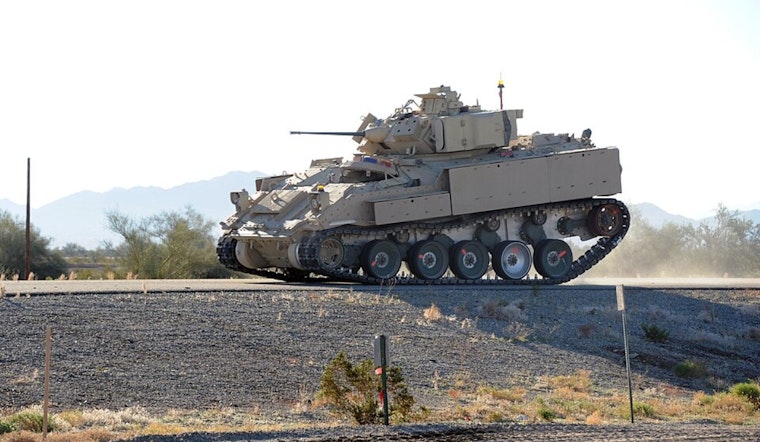
The Army’s race to build the XM30, the planned replacement for the M2 Bradley, has turned into a make or break moment for southeast Michigan manufacturing. From Sterling Heights to Auburn Hills, automotive and defense suppliers are being pitched as crucial cogs in a multiyear effort that could reroute billions in Pentagon business and hundreds of local jobs. For metro Detroit, the contest feels less like a distant defense procurement and more like a region wide stress test of whether local factories can flip automotive know how into next generation military hardware.
Two teams, national money, local factories
The Army has narrowed the XM30 competition to two teams, General Dynamics Land Systems and American Rheinmetall, and the program has been described in reporting and Pentagon summaries as a multibillion dollar effort that could reach roughly $45 billion across production and sustainment. Defense News and syndicated coverage of the Army announcement note the downselect and the program’s overall scale.
Why Michigan matters
American Rheinmetall has explicitly doubled down on Michigan. The company announced a roughly $31.7 million investment to modernize facilities and consolidate operations into a new Auburn Hills site, saying the move will create about 450 jobs and support its XM30 work. American Rheinmetall cited Michigan’s industrial base as a key reason for the expansion. Meanwhile, General Dynamics Land Systems maintains major engineering and production operations in Sterling Heights and lists Michigan among its principal U.S. sites. General Dynamics Land Systems continues to point to its local facilities and suppliers as part of its pitch to the Army.
Jobs, factories and the timeline
State and local officials have leaned hard on the economic angle, and company filings and press releases indicate that Michigan stands to gain factory work, supplier contracts and staffing as prototypes move from digital design to physical build. Coverage in OaklandCounty115 and the companies’ own announcements highlight the job figures and facility plans tied to the XM30 effort. Industry reporting says prototypes are slated for delivery into 2026, with low rate production and a final selection window around fiscal 2027, making the next 12 to 18 months decisive for who locks in long term work. Axios reports timelines that put prototype testing in the near term.
Voices and what to watch
Elected leaders have framed the project as strategic for Michigan’s industrial future. In local coverage, U.S. Sen. Gary Peters described the XM30 effort as of “critical importance” to the region’s economy and defense posture. The Detroit Free Press published Peters’ comment while profiling the companies and local facilities that factor into the bid. Observers say the key things to watch now are prototype deliveries this summer and the Army’s production decision timetable through 2027, which will determine whether engine, turret and electronics work stays in Michigan over the long haul. National Defense has tracked the soldier touchpoints and Detroit Arsenal testing that feed the program’s schedule.
For Detroit area manufacturers, the XM30 competition is a rare chance to convert automotive supply chains and skilled trades into decades long defense work. Whether that payoff materializes will come down to testing results, the Pentagon’s 2027 acquisition choices and which supplier networks can prove they can deliver rapid production, secure supply lines and affordable sustainment at scale.





