

























































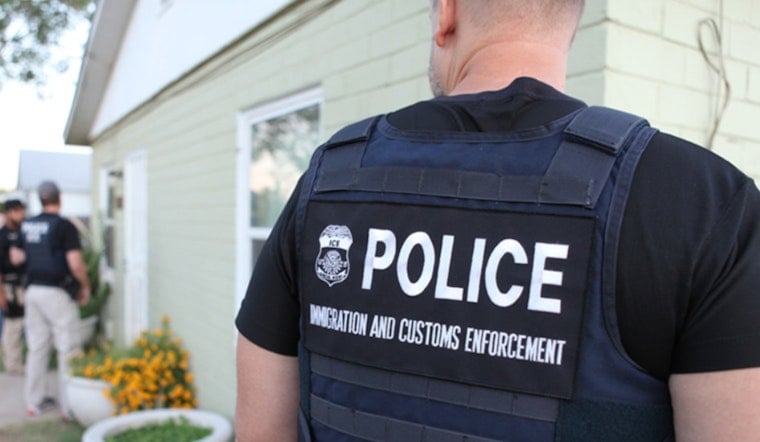
A federal appeals court on Tuesday upheld an order limiting immigration enforcement at eight houses of worship tied to Quaker, Sikh and Cooperative Baptist Fellowship communities, delivering a win to faith groups that sued after the Trump administration stripped away long-standing protections for churches, meeting houses and temples. The unanimous three-judge panel found that fear of arrest had a real, measurable effect on congregants, with one Baptist church reporting a 66% drop in attendance at its English-as-a-second-language classes.
The ruling from the U.S. Court of Appeals for the 4th Circuit, in Philadelphia Yearly Meeting of the Religious Society of Friends v. U.S. Department of Homeland Security, was written by Senior Judge Barbara Milano Keenan and joined by Judges Pamela Harris and G. Steven Agee, according to NationofChange. As reported by Reuters, Keenan wrote that the threat of immigration enforcement at the plaintiffs' houses of worship is real and substantial, and that the Department of Homeland Security intends to target those sites in future enforcement actions. The 40-page opinion, as detailed by Colorado Politics, cited evidence that the policy deterred both undocumented immigrants and legal residents from attending services altogether.
A Policy Rollback That Triggered the Lawsuit
The case traces back to a January 20, 2025, memo from then-Acting DHS Secretary Benjamine C. Huffman, which revoked a 2021 directive issued under Alejandro Mayorkas that had required agency headquarters approval before enforcement actions in protected areas, per Santa Clara University. That older policy had directed agents to avoid arrests in places like churches and schools; Huffman's memo instead told agents to rely on discretion and common sense. Reuters reports that a DHS spokesperson at the time said people would no longer be able to hide in schools and churches to avoid arrest.
Restrictions on immigration enforcement near houses of worship are not new — they date to 1993 under the Clinton administration, with formal policy set in an October 2011 memo by then-ICE Director John Morton, according to the Wake Forest Law Review. That 2011 memo barred arrests, searches, surveillance and interviews at places of worship and schools absent exigent circumstances, a standard that held across administrations of both parties for more than three decades before it was undone last year.
Why the Government Lost on Religious Freedom Grounds
The 4th Circuit panel held that the federal government waived its right to argue immigration enforcement at houses of worship serves a compelling government interest under the Religious Freedom Restoration Act, because Justice Department attorneys never raised that defense before the district court, the panel found. Under RFRA, federal agencies are barred from substantially burdening a person's or organization's exercise of religion unless the government proves the burden furthers a compelling interest through the least restrictive means available, per the statutory framework described by Mitchell Hamline Open Access. Reuters reports the Trump administration had argued that plaintiffs could not establish the policy would cause immigrants to stop attending religious services, and separately argued the policy did not prevent plaintiffs from conducting worship or ministry services.
The appeals court addressed only the RFRA claims and did not decide the First Amendment issues raised in the case. U.S. District Judge Theodore Chuang in Maryland had issued the underlying preliminary injunction in February 2026, requiring DHS to follow the prior 2021 guidelines while the case proceeded, and Tuesday's ruling affirms that order.
A Narrow Shield, Not a Nationwide One
In a concurring opinion, Judge Agee stressed that the injunction's scope is strictly narrow, covering roughly 1,700 places of worship across 35 states, Washington, D.C., and Puerto Rico that are affiliated with the eight plaintiff groups, according to the Maryland Daily Record. It does not extend to other sensitive sites such as hospitals or shelters, and the district court had previously denied the plaintiffs' request for a nationwide injunction. Reuters notes the case is one of several similar legal challenges filed nationally by religious groups.
That narrow scope creates a genuine split among federal courts. In April 2025, U.S. District Judge Dabney Friedrich in Washington, D.C., denied a preliminary injunction sought by a coalition of 27 Christian and Jewish groups in a separate case, ruling they lacked standing because they failed to prove an imminent, specific threat of ICE enforcement, according to Courthouse News Service. That decision was appealed to the D.C. Circuit. The contrast means that while the eight plaintiffs here won concrete protection, thousands of other congregations remain outside the shield unless broader rulings emerge from other circuits.
Faith Leaders and Advocates React
Democracy Forward's Skye Perryman said religious freedom protects people gathering to worship in churches, meeting houses, temples and other houses of worship, and said the ruling prevents what she called the Trump-Vance administration from forcing people of faith to abandon their ministries or worship under a constant threat of indiscriminate enforcement. Court filings from Democracy Forward documented allegations of ICE officers arresting individuals in church parking lots, during preschool drop-offs, and conducting surveillance near places of worship, with faith leaders reporting they had to implement security training and limit public outreach as a result.
The legal fight has grown well beyond the eight original plaintiffs. In June 2026, advocacy groups including Democracy Forward, the Washington Lawyers' Committee and Gilbert LLP expanded related federal litigation to represent a coalition of more than 7,000 congregations nationwide challenging DHS church enforcement, according to the Washington Lawyers' Committee. That amended complaint cited declining donations, locked church doors, and altered ministry operations as evidence of harm. For its part, ICE has maintained it does not target places of worship; a DHS spokesperson said criminals can no longer hide in places of worship to avoid arrest, while adding that an arrest may still be made if a dangerous felon flees into a place of worship to protect public safety.
The 4th Circuit's decision marks a significant setback for the administration's broader effort to eliminate sensitive-location restrictions on immigration enforcement, though its reach is limited to the eight plaintiff organizations and the roughly 1,700 sites tied to them. Hoodline has previously reported on how the policy shift has rippled through congregations elsewhere, including how a Tukwila church-based shelter filled up as enforcement risk grew, and how Sacramento clergy were separately barred from holding prayer vigils outside an ICE office. With the First Amendment claims still undecided and other circuits weighing similar cases, the legal fight over whether churches nationwide can be treated as fair game for immigration agents is far from settled.





