

























































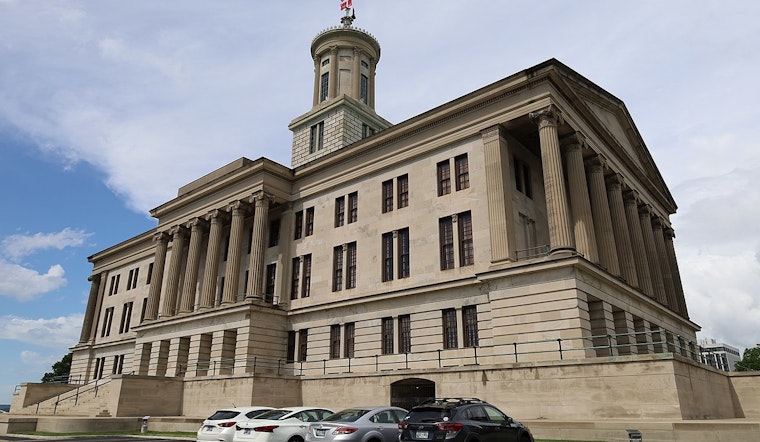
On March 4, 2026, Tennessee lawmakers in Nashville tapped the brakes on a headline-grabbing proposal that would require every public university in the state to build a "Charlie Kirk Memorial Courtyard for Civil Debate." As drafted, the bill orders each campus to carve out a 1,600 square foot plaza featuring full-text displays of the Ten Commandments, the Bill of Rights, the Declaration of Independence and Article I of the Tennessee Constitution, all open to the public by December 31, 2026. The price tag lands in the multi-million-dollar range in the first year alone.
According to WVLT, the House Higher Education Subcommittee on March 4 voted to send HB2025 to summer study, effectively shelving it for the rest of this session. WVLT reports the bill was introduced by Rep. Monty Fritts (R-Kingston) and formally brands each space as the "Charlie Kirk Memorial Courtyard for Civil Debate."
Why the memorial reference
The proposal is framed as a memorial in the wake of the death of conservative commentator Charlie Kirk, who was shot and killed at Utah Valley University on September 10, 2025, according to reporting by AP. Supporters argue that naming and outfitting the courtyards this way would promote civil discourse on campus and give students a dedicated spot for tough conversations. Critics counter that writing a statewide, mandatory memorial to a polarizing political figure into law raises serious political and constitutional concerns, especially for public institutions that serve students across the ideological spectrum.
What the bill would require
According to the Tennessee General Assembly's bill page, each courtyard would have to measure at least 1,600 square feet and follow a specific layout: Tennessee's Article I declaration of rights on the northern side, the Ten Commandments on the southern side, the Bill of Rights on the eastern side and the Declaration of Independence on the western side. The bill also specifies plaques of at least 24 by 36 inches, with the text printed in 36-point type so no one can claim they could not read it.
The fiscal summary for HB2025 estimates FY2026-27 costs of $11,875,000 for the Tennessee Board of Regents system, $3,750,000 for the University of Tennessee system and $2,510,000 for locally governed institutions, for a combined total of $18,135,000. The text authorizes university governing boards to accept gifts, donations and grants to design, install and maintain the courtyards. The bill text and fiscal note on the General Assembly site spell out the full construction and maintenance framework.
Legal questions
The Ten Commandments requirement is already raising eyebrows among legal observers who have watched similar fights play out in federal court. The Supreme Court struck down mandatory classroom postings of the Ten Commandments in Stone v. Graham (1980), a case summarized by Justia, while a later decision, Van Orden v. Perry (2005), allowed a Ten Commandments monument to remain on state capitol grounds as part of a broader historical display, according to Oyez. Legal scholars say any challenge to a campus display like the one envisioned in HB2025 would likely turn on the surrounding context, the state's stated secular purpose and how courts currently balance historical practice against concerns over government endorsement of religion.
The measure is cross-filed in the Senate as SB1959 and remains pending, according to LegiScan. With HB2025 diverted to summer study, Tennessee campuses are not racing to pour concrete just yet, but university boards, lawmakers and civil liberties groups are watching closely as the next legislative work period approaches.





