

























































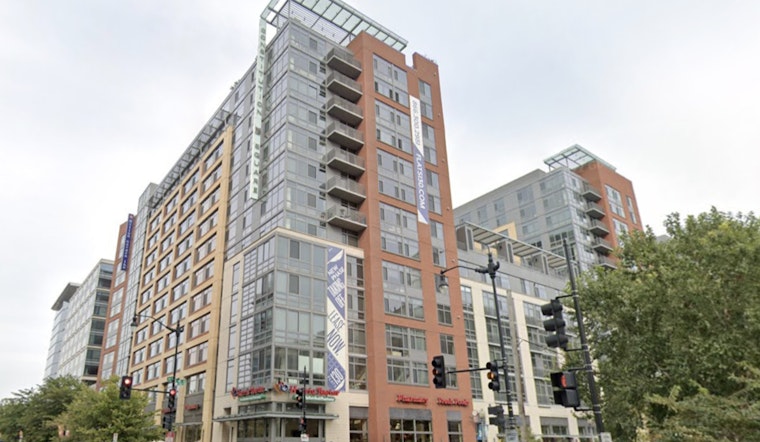
NoMa’s pioneering Flats 130, the three-building apartment complex that helped jump-start the neighborhood’s development wave, is officially up for grabs. With 643 apartments stacked above a roughly 50,000-square-foot Harris Teeter, the property ranks among the largest multifamily deals now on the market in D.C. Expect institutional players that like their rent rolls steady and their grocery anchors strong to circle this one fast.
The CBRE marketing materials describe Flats 130 as a three-part community within the Constitution Square development, with occupancy at roughly 95% in early February. One-bedrooms make up about 51% of the units, two-bedrooms roughly 27%, and the average rent clocks in around $2,502 per month, according to CBRE. The flyer leans hard on the Harris Teeter as the flagship retail anchor and pitches the community as a candidate for renovations and rent-premium capture. CBRE confirms it is marketing the asset on behalf of Nuveen.
Who’s Selling And What They Said
Nuveen, the asset manager affiliated with TIAA, is listed as the owner. A company spokesperson told Bisnow that Nuveen is “looking to conclude its investment in the property” and remains “optimistic” about Harris Teeter’s role as a diversified revenue driver. Translation for would-be buyers: the seller is ready to exit but considers the grocery anchor a core piece of the long-term story. Marketing language around “grocery-anchored stability” is aimed squarely at cautious capital, and local brokers say that mix often pulls in pension funds and REITs chasing predictable cashflow.
Market Context
The timing is interesting. Regionwide multifamily investment slowed in 2025, even as activity showed signs of life late in the year. Washington-area multifamily sales volume totaled about $5.3 billion, a 26.4% drop from the prior year, according to Newmark. The same report flags softer fundamentals, including weaker absorption and modest rent pressure. At the same time, it points to policy clarity and a fourth-quarter rebound as reasons for guarded optimism. In that kind of environment, a fully leased, grocery-anchored asset like Flats 130 is being positioned as a safer, “sleep-at-night” investment rather than a high-octane value-add play.
TOPA, The RENTAL Act And The Sale
The District’s RENTAL Act introduced a new-construction exemption from TOPA for buildings less than 15 years old, reshaping when tenants have first-refusal rights on a sale. That creates a wrinkle here. Two of the Flats 130 buildings opened in 2010 and the third in 2013, which means the property’s TOPA status is not automatic and will need a legal once-over from any buyer, according to Holland & Knight. CBRE’s materials do not spotlight TOPA, so prospective owners will have to build that analysis into their due diligence, particularly around notice, timing and any potential impact on pricing or closing windows.
Background And What’s Next
Flats 130 sits inside the roughly 2.7-million-square-foot Constitution Square project developed by Stonebridge and Walton Street, according to Stonebridge. The apartment complex was sold to TIAA, now linked with Nuveen, in 2014 for about $295 million, according to the Washington Business Journal. With transit access, a hotel component and that big-box grocery at its core, Constitution Square became a major driver of NoMa’s growth. Brokers expect CBRE to target institutional bidders comfortable writing large checks for scale and stable retail income.
For residents, a new owner could mean capital upgrades and refreshed amenities rather than dramatic change overnight. For the wider market, the eventual sale price and buyer profile will offer a closely watched read on just how much appetite remains for grocery-anchored multifamily assets in the District.





