

























































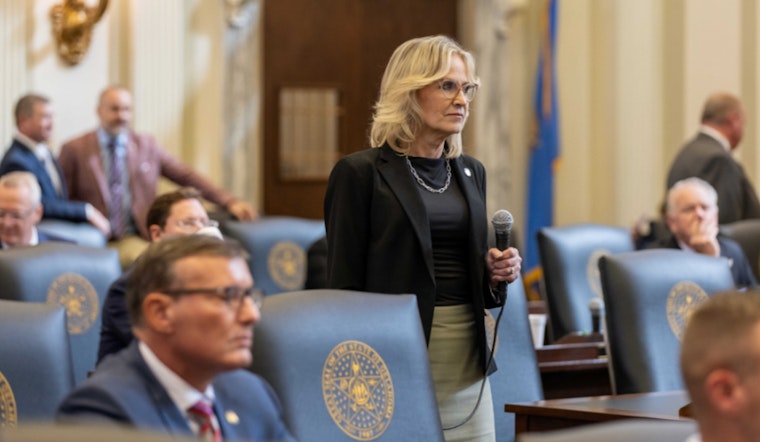
The Oklahoma House has signed off on a small but notable bump to the state’s main highway funding pot, approving House Bill 4280 on Friday to raise the ROADS Fund ceiling by $10 million and tack on new reporting rules for major projects. The bill, carried by Rep. Nicole Miller of Edmond, is pitched as a modest tune-up aimed at keeping long-term planning and preservation on track at the Oklahoma Department of Transportation (ODOT). The measure passed the House with the title off and now heads to the Oklahoma Senate, as reported by the Oklahoma House of Representatives.
Rep. Nicole Miller framed the move as a basic cost-of-doing-business adjustment in an inflation-heavy era. “Oklahoma has made meaningful investments in transportation over the past several years, but inflation and rising construction costs mean we have to adjust if we want to stay on track,” she said. Miller added that the bill “helps ensure the ROADS Fund remains reliable and sustainable so ODOT can continue planning and delivering the highway and bridge projects our communities depend on,” according to a House press release from the Oklahoma House of Representatives.
What HB 4280 Changes
HB 4280 would raise the annual ROADS Fund apportionment cap by $10 million, setting it at $670,000,000 for the fiscal year beginning July 1, 2026 (FY 2027) and for each year after that. The measure revises the statutory apportionment language in 69 O.S. Section 1521 and includes an emergency clause so the changes would take effect immediately if the bill becomes law. The full proposal is laid out in the Oklahoma Legislature.
How the ROADS Fund Is Used
The ROADS Fund is the dedicated state revenue stream that drives ODOT’s Eight-Year Construction Work Plan and its companion Asset Preservation Plan. Together, those multi-year blueprints decide which highway and bridge projects move forward in a given year and which ones get pushed back, reshuffled or held for future funding. Even relatively small shifts to the fund ceiling can change when projects get scheduled or how tightly ODOT has to manage its pipeline. For a deeper dive into how those plans are assembled and updated, see the current work plan from the Oklahoma Department of Transportation.
The Numbers And The Gap
The House release points out that Oklahoma’s state highway system is valued at roughly $126 billion, with about $33 billion in identified deficiencies. That context makes the $10 million increase look more like a minor calibration than a game-changing cash infusion. Supporters say the extra room in the ROADS Fund helps ODOT keep project schedules and budgets more predictable, even if it does not erase the much larger backlog. Critics are likely to view the change as incremental at best while the bigger funding gap still looms. Those valuation and deficiency figures come from the Oklahoma House of Representatives.
With House passage in hand, HB 4280 now moves across the rotunda to the Senate. If senators sign off, the bill would return to the House for final approval before landing on the governor’s desk. Lawmakers and ODOT officials describe steps like this as routine fine-tuning meant to keep multi-year plans balanced while project lists and preservation priorities evolve. Expect some behind-the-scenes negotiating over which projects move up, which slide back and how the new cap gets folded into ODOT’s next planning cycle.





