

























































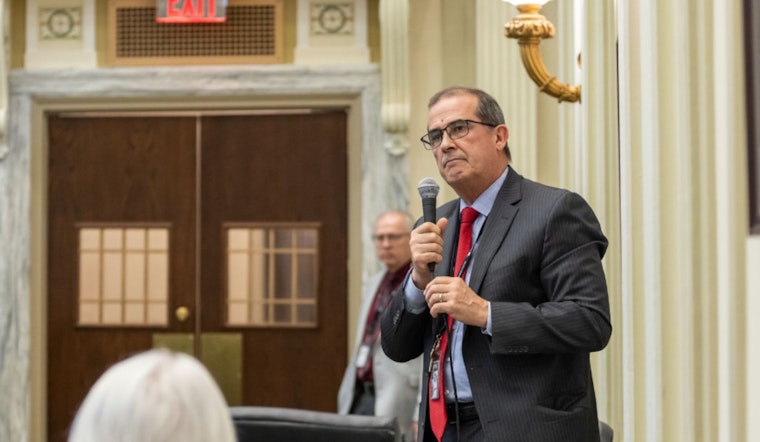
Three Oklahoma lawmakers are asking the state’s highest court to tear up roughly $1.5 billion in 2023 fuel and purchased‑power charges for Oklahoma Natural Gas, OG&E and PSO, arguing that the costs were pushed straight onto customers and have already been collected on monthly bills. Their move lands in the middle of a years‑long legal slugfest over audits, prudence reviews and whether Corporation Commissioner Todd Hiett should have stayed out of the cases, as per the Oklahoma House of Representatives.
The brief, filed by Reps. Tom Gann (R‑Inola), Kevin West (R‑Moore) and Rick West (R‑Heavener), asks the Oklahoma Supreme Court to overturn Oklahoma Corporation Commission orders that signed off on about $1.5 billion in 2023 costs: roughly $530 million for Oklahoma Natural Gas, $550 million for Public Service Company of Oklahoma and $763 million for Oklahoma Gas & Electric, according to the Oklahoma House of Representatives. The filing accuses the commission of breaking state rules on audits and prudence reviews and says ratepayers were denied notice and due process. The lawmakers want new audits and prudence reviews handled by outside, independent auditors and experts instead of the OCC’s in‑house Public Utility Division staff.
As reflected in the Oklahoma State Courts Network, the legislators filed a combined reply brief in the consolidated 2023 fuel cases on Thursday. Their appeals point back to a December 2025 brief that claimed an OCC Public Utility Division analyst, described there as a college dropout, had audited more than $1 billion in charges and then testified that the costs were “prudently incurred.” The state attorney general filed an answer brief on Jan. 27 defending the OCC and the PUD staff’s work, according to Oklahoma Energy Today.
What The Lawmakers Want From The Court
Gann, West and West are asking the justices to void the OCC approvals and send the 2023 fuel‑cost orders back for what they describe as lawful audits and independent prudence reviews. They argue that because the charges move straight through fuel adjustment clauses, ratepayers have already covered the tab.
“Fuel adjustment clause charges are passed through directly onto customers' bills, so the utilities have already collected this money from us,” Gann said in the release, as reported by KFOR. In other words, this is not about hypothetical future hikes; it is about money customers have already paid.
Ethics Questions Around The Commissioner
The latest briefs also revisit accusations that OCC Commissioner Todd Hiett should have recused himself from the fuel‑cost cases. Lawmakers point to events hosted by attorneys tied to the utilities where, they claim, Hiett engaged in misconduct.
The Oklahoma Ethics Commission tossed out a complaint in May 2025, and a 2024 attorney general opinion limited the Council on Judicial Complaints’ ability to dig into the matter, as reported by The Journal Record. Those ethics rulings now sit at the center of the legislators’ broader argument that the OCC’s audits and approvals were tainted.
What It Could Mean For Your Power Bill
The representatives keep coming back to one basic point: fuel‑adjustment charges are pure pass‑throughs. If the court throws out the OCC’s approvals, that could open the door to refunds or bill corrections for customers who have been paying those line items for years.
OG&E and PSO winter‑storm securitization charges have appeared on bills since 2022. One tally cited in the filings puts the total at roughly $5 billion once interest and fees are counted, according to Oklahoma Energy Today. With that kind of money at stake, even a modest ruling in customers’ favor could have a noticeable impact on household budgets.
Where The Case Sits Now
The combined reply brief that landed Thursday is currently listed as the final filing in the 2023 fuel‑cost appeal on the Oklahoma Supreme Court docket, so the justices can rule whenever they are ready, according to the Oklahoma State Courts Network. The state and the utilities filed their answer briefs in January and February, and the case is now fully submitted.
Legal watchers say the decision could clarify how far the OCC can go with internal audits, what kind of notice and hearings customers are entitled to, and whether any legal or ethical lines were crossed in approving the massive fuel charges.
The Legal Stakes Going Forward
The appeals drill into statutory questions about how audits must be carried out under the Oklahoma Accountancy Act and whether rate‑case procedures give affected customers real due process. The lawmakers want the court to require full CPA‑level audits and independent prudence reviews instead of relying on the OCC’s Public Utility Division, an argument tied to the statutory framework and earlier filings summarized by The Journal Record.
No matter how the Supreme Court rules, its decision will shape how the OCC handles high‑dollar fuel costs and potential conflicts in future cases. The lawmakers are already signaling they are not done. They told reporters they expect more appeals, saying in their release that “the next cases are worth another $6.5 billion,” according to the Oklahoma House of Representatives. For now, Oklahomans watching their monthly bills can follow each new twist on the Oklahoma Supreme Court’s consolidated case docket.





