

























































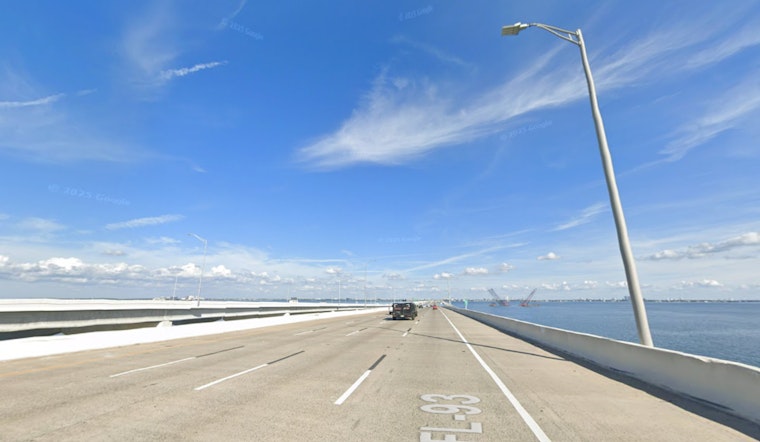
The original 1960s northbound span of the Howard Frankland Bridge is officially gone, marking a major milestone in the long-running I‑275 rebuild across Tampa Bay. Crews are still on the job finishing the new express lanes, a separated shared-use path and a short list of remaining details, and transportation officials say the full replacement project is still on track to wrap in summer 2026.
FDOT West Central - Tampa Area on X announced the moment, declaring, “Demolition of the 1960s Howard Frankland Bridge is COMPLETE!” The post added that construction is continuing as the contractor completes the express lanes, the shared-use path and other minor work.
Demolition of the 1960s Howard Frankland Bridge is COMPLETE! Construction is still on-going as the contractor finishes the express lanes, the shared-use path and other minor work. For project details: https://t.co/xw61YrS6UJ https://t.co/9UytUBCKk9
- FDOT West Central - Tampa Area (@FDOT_TampaBay) March 26, 2026
What Still Needs Finishing
According to FDOT, the new southbound span is “98% complete (installing railings, lighting and aesthetic features)” while crews close out the express lanes and the 12-foot shared-use path. The agency lists the contractor as the Archer Western/Traylor Bros. joint venture, with a construction cost of $973.4 million. FDOT also sets the project limits from 4th Street in Pinellas County to SR 60 in Hillsborough County and continues to estimate final completion in summer 2026.
What It Means For Drivers
Once the dust fully settles, the finished bridge will carry eight lanes across the bay, four general-purpose lanes plus four tolled express lanes, along with a separated pedestrian and bicycle path. Those features are expected to ease strain on the busy corridor. Engineering News-Record notes that the bridge work plugs into a broader I‑275 express-lane expansion aimed at trimming delays and improving freight reliability.
Closures And What To Watch
FDOT is also keeping an updated list of scheduled night lane closures and travel advisories, including recent overnight shutdowns as crews finish the last items on the structure. Drivers are urged to keep following posted signs and temporary detours while railing, lighting and other finishing work continues.
How The Demolition Was Done
Local coverage followed a careful, piece-by-piece takedown that relied on barges and cranes instead of explosives, a slower approach intended to limit environmental and marine impacts and allow demolition material to be recovered for reuse. FOX 13 Tampa Bay reported early in the process that FDOT emphasized both safety and recycling as central goals of the project.



