

























































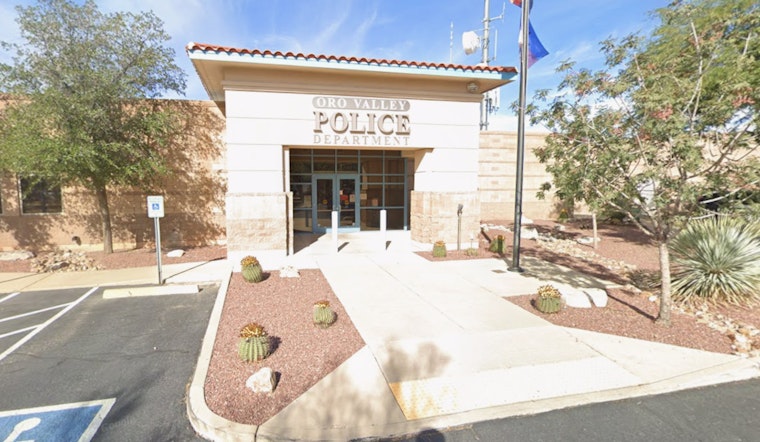
Oro Valley is about to see more police activity in the skies. The Town Council has unanimously signed off on a roughly $146,000 grant that lets the police department enter a one-year agreement with Flock Safety to add four remote-operated drones to its fleet. Police say the drones are meant to act as first-responder tools, giving officers an early look at dangerous scenes and helping speed up evidence collection, not to conduct round-the-clock neighborhood surveillance. Still, the plan is already facing criticism from privacy advocates and residents who worry that license-plate-reading cameras on the drones could expand vehicle tracking across city and state lines.
The council vote approved an Arizona Department of Public Safety grant that will pay for the one-year deal and the four new drones, which will supplement the department’s existing fleet, police told council members, according to AZPM. Lieutenant Kevin Peterson told the council the new units can be operated remotely so officers can assess scenes before they roll up in person. Supporters argued the aircraft will be especially useful on high-risk calls, including chases tied to drug smuggling and human trafficking.
What the drones can do
Flock’s Drone as First Responder system is designed to reach emergency scenes quickly and is equipped with cameras that the company says can read license plates from high altitudes. The drones plug into Flock’s broader platform so live video, alerts and plate reads can be routed to officers and analysts in real time, according to Flock Safety.
Police say there are limits
Oro Valley commanders told the council the drones will only record when operators decide it is essential for gathering evidence, and “we do not do random surveillance with this platform,” Commander Zachary Young said. Police officials also emphasized that they control when drones can be launched and who can access any footage, stressing that the program is meant to boost officer safety rather than create a constant aerial watch, per AZPM.
Privacy advocates push back
Civil liberties groups warn that pairing drones with automated license-plate readers can create persistent, searchable location records for everyday drivers, a concern raised by ACLU chapters and local advocates in recent debates, according to Connecticut Public. The issue has national resonance after reports that Flock systems were searchable by federal agencies and the company briefly paused certain federal pilots while it tightened controls, according to The Associated Press. Privacy researchers have also flagged accuracy and scope problems with automated plate readers that could be magnified when combined with aerial data, as the Electronic Frontier Foundation has noted.
How this fits locally
Oro Valley already uses Flock automated license-plate readers around town, so adding drones would extend a technology footprint residents have been debating for more than a year, according to the Atlas of Surveillance. The one-year contract is covered by the DPS grant, and police told council members they could walk away from renewing the program if future grant dollars do not materialize, per local reporting and council remarks and as covered by FOX 10 Phoenix. Residents worried about how the system will be used can track council agendas and submit public-records requests to review usage policies and data-access rules.





