

























































Those windowless data fortresses rising across metro Phoenix are not just gulping electricity. Arizona State University researchers say the heat they dump into the air is drifting into nearby neighborhoods and nudging local temperatures up by several degrees, raising public health questions just as state officials and utilities race to keep up with a fast-growing data center boom.
Field measurements show persistent plumes
David Sailor, director of ASU’s School of Geographical Sciences and Urban Planning, told reporters his team repeatedly picked up a downwind "heat plume" from large facilities and logged temperature differences on the order of several degrees Fahrenheit between nearby blocks. In one run, the area closest to a center averaged about 2.5°F warmer than a slightly more distant zone, and Sailor said concentrated operations can generate waste-heat fluxes in the thousands of watts per square meter. He also said the plume showed up "irregardless of the wind direction." These details were reported by Arizona's Family.
How the team measured the heat
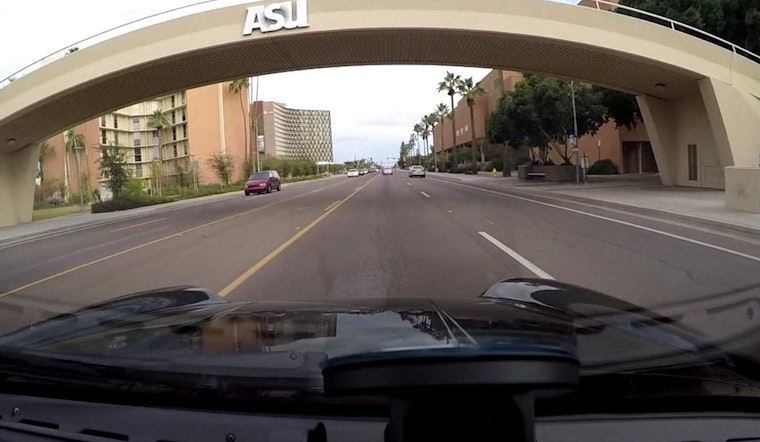
Sailor’s group relied on what he called "episodic, opportunistic measurements." Multiple vehicles outfitted with mobile temperature sensors drove coordinated routes around data center perimeters to capture short-term spatial temperature patterns. The setup is meant to flag highly localized plumes rather than build a full long-term climate record, and Sailor has stressed that the work is still preliminary. The project and its broader context were described at an ASU knowledge exchange, as covered by ASU News.
Why a few degrees matters
Those extra degrees matter most at night, when the body is supposed to cool down and recover. Epidemiological research has tied hot nights to higher death rates. An analysis in Environmental Health Perspectives found that all-cause mortality rose by roughly 9–10% after very hot nights in a large study in Japan. Other U.S. work has linked both the intensity and duration of heat waves to measurable increases in deaths; for example, Anderson and Bell’s multi-city analysis is frequently cited for showing that higher heat wave intensity significantly raises mortality risk, as detailed in Anderson and Bell (2011).
Policy and the power squeeze
The timing of ASU’s findings is tricky for policy makers. State leaders and utilities are already trying to figure out how to feed a surge of new server farms without blowing past power and infrastructure limits. House Bill 2457, introduced by Rep. Justin Wilmeth, would adjust siting rules for certain power plants and has drawn close scrutiny from cities and advocates. The bill text is posted by the Arizona Legislature. At the same time, local reporting shows municipalities and utilities revisiting zoning, will-serve letters and permitting rules as they wrestle with data center power needs and neighborhood pushback, as reported by KJZZ.
Design fixes could blunt neighborhood heat
Sailor has pointed to relatively straightforward engineering tweaks and building-code changes that could reduce how much of that waste heat washes directly over nearby homes. Ideas include rearranging rooftop equipment layouts and adjusting fan vertical velocity so more of the hot air rises and disperses higher in the atmosphere instead of blowing sideways into surrounding streets. Those rooftop and code-focused options have been highlighted as near-term mitigation steps in local coverage by Arizona's Family.
ASU is stressing that this research is an early look and that more systematic monitoring and peer-reviewed analysis will be needed before regulators overhaul standards. For now, the measurements are adding a fresh technical wrinkle to local fights over where data centers belong and what responsibility they have for the heat they send into surrounding neighborhoods.





