

























































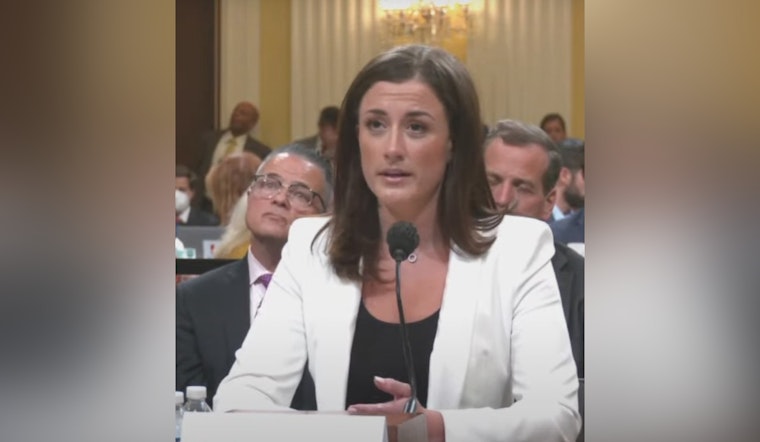
Cassidy Hutchinson, the 29-year-old former top aide to Mark Meadows whose 2022 testimony reshaped the public record on Jan. 6, is now facing a different kind of spotlight. A Republican-led House panel has sent a criminal referral to the U.S. Department of Justice alleging she lied to Congress, and reports say House Judiciary Chair Jim Jordan co-signed the move.
According to CNN, Rep. Barry Loudermilk recently transmitted the referral, urging federal prosecutors to review Hutchinson's June 2022 testimony before the House Jan. 6 committee. CNN reported that the Justice Department did not immediately comment and that Hutchinson's lawyers did not respond to multiple requests for comment.
Hutchinson vaulted into national prominence in 2022 as Meadows's close aide, and her detailed accounts of life inside Donald Trump's West Wing continue to fuel fierce debate, the News & Observer has reported. Among the most explosive moments: her testimony that the White House had been warned Jan. 6 could turn violent, and that she overheard Meadows say Vice President Mike Pence “deserved to be hung.” The paper notes she was just 24 when she served as Meadows's top aide, that she later received a security detail, and that she kept a low public profile after testifying.
Where Hutchinson's testimony fits
Hutchinson's interviews, both behind closed doors and in a public hearing, are preserved in the House Jan. 6 committee's extensive record. The panel's public materials, including transcripts, exhibits and video, are compiled in the committee's final report, which lays out the evidence that underpins Hutchinson's testimony and the committee's account of pre-Jan. 6 White House discussions.
Legal and political implications
A congressional referral is not the same thing as an indictment. Prosecutors often treat such letters as tips, then make their own call about whether to open or expand a criminal investigation, CNN noted. It is essentially a political body asking the Justice Department to take a closer look, not ordering it to act.
If prosecutors were to move forward, legal specialists say they would likely be looking at familiar tools in the federal code: the false statement statute and perjury provisions. A Congressional Research Service overview explains that statutes such as 18 U.S.C. § 1001, along with related perjury laws, are the typical foundations for these kinds of cases and can carry potential prison terms in some circumstances, according to the Congressional Research Service.
There are no public charges against Hutchinson at this point. The next move belongs to the Justice Department, which will have to decide whether the referral adds anything significant to the existing record or reveals statements that it views as materially inconsistent with her prior sworn testimony.



