

























































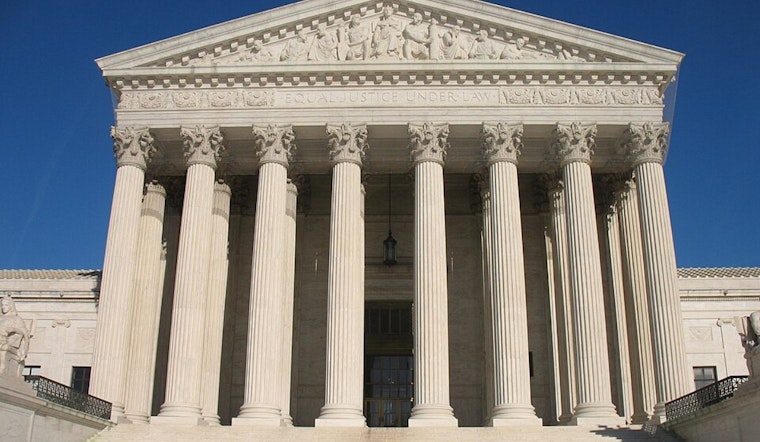
The U.S. Supreme Court is set to hear oral argument in Noem v. Al Otro Lado tomorrow, pulling a seven-year fight over border metering into the national spotlight. At the heart of the case is a deceptively simple question: has a noncitizen who is stopped by U.S. officers on the Mexican side of a port of entry arrived in the United States under federal asylum and inspection laws? How the justices read that single word could decide whether people waiting in cities like Tijuana are allowed to seek protection at all. The San Diego-based advocates who brought the case say the stakes are painfully concrete, arguing that access to asylum at a busy port of entry can mean the difference between safety and exposure to violence for people stuck just across the line.
When the court will hear it
Oral argument is scheduled for March 24, 2026, according to SCOTUSblog, following the Court's decision to grant review in November 2025. That calendar slot puts Noem v. Al Otro Lado in the middle of a term already packed with major immigration cases and makes it likely that the justices will hand down a decision before the term wraps up in June.
What the lawyers are arguing
In a merits brief filed January 6, the federal government contends that the Immigration and Nationality Act's asylum and inspection provisions apply only to people who are physically inside the United States. On that reading, someone stopped on the Mexican side of the line has not "arrived" within the meaning of the statute, according to the petitioners' brief filed with the Court.
The respondents - Al Otro Lado and a certified class of asylum seekers - argue the opposite. They say "arrival" should be understood as a process that begins when a person comes to the port of entry and seeks inspection, and that physically blocking people from even approaching inspection points undermines the system Congress created. Those arguments are laid out by the group's litigation team.
The rhetorical lines are not subtle. The Center Square reported that a state solicitor general told the justices that someone stopped in Mexico is "definitionally not in the United States," a blunt framing that captures how some parties see the case. The Center Square covered those remarks.
Why San Diego groups care
Al Otro Lado, a legal services and advocacy nonprofit based in San Diego, joined with several individual asylum seekers to file the original class action after what they describe as years of systematic turnbacks that left people marooned in Mexican border cities. On October 23, 2024, the Ninth Circuit largely sided with them, holding that metering was unlawful and that people who encounter U.S. officials at ports of entry can be treated as having "arrived" in the United States. That decision, now on review at the Supreme Court, is detailed in the appellate opinion available at Justia.
San Diego-area advocates and legal organizations say those turnbacks have not been an abstract policy dispute. They argue that pushing people back to wait in Mexico has exposed migrants to kidnapping, assault, and other dangers while they linger in border communities, a pattern documented by the American Immigration Council and other groups.
Legal implications
A ruling in the government's favor would expand the executive branch's ability to keep people from stepping onto U.S. soil to request asylum in the first place. A decision for the respondents would tighten limits on metering and could force the Department of Homeland Security and Customs and Border Protection to revisit how they staff and process would-be arrivals at crowded crossings.
The dispute arrives as part of a broader wave of immigration and citizenship cases at the Court this spring. Observers note that the opinion, expected by June, could echo through related enforcement and administrative law fights, a dynamic SCOTUSblog has described.


