

























































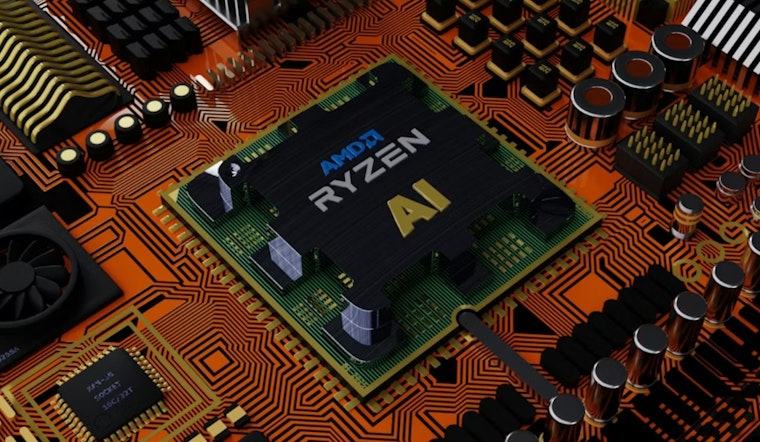
San Jose-based Adeia has called a cease-fire in its patent fight with Advanced Micro Devices, announcing today that the two sides struck a multi-year license agreement and settled a pair of federal lawsuits in Midland, Texas. The license covers Adeia's semiconductor patent portfolio, including patents tied to hybrid bonding and advanced packaging, and the settlement lifts a legal cloud that had been hanging over parts of the chip supply chain. Adeia is pitching the resolution as a clean slate for both companies to move ahead and potentially team up on next-generation semiconductor technologies.
In a press release filed as an exhibit to its Form 8-K, Adeia said AMD agreed to take a multi-year license to its semiconductor patents and confirmed that it had asked the Midland court to dismiss the two pending cases. "Resolving our disputes allows both companies to move forward and creates an opportunity for exploring future collaborations on advanced semiconductor technologies," Adeia CEO Paul E. Davis said in the filing.
What's in the deal
The companies are keeping financial terms under wraps. According to Reuters, AMD had previously denied Adeia's infringement allegations in court papers and did not immediately comment on the settlement. Reuters also reported that Alston & Bird represented Adeia and O'Melveny & Myers represented AMD.
Background: patents and the ITC complaint
Adeia's legal campaign was not limited to Texas. The company also brought a Section 337 complaint at the U.S. International Trade Commission that sought a limited exclusion order targeting certain AMD devices, as reflected in the commission's notice. That USITC notice identifies patents covering hybrid-bonded structures and names AMD processors and computing devices as accused products. Industry coverage has linked those patents to AMD's 3D V-Cache stacking approach, which uses hybrid bonding to connect cache die to compute die, as explained by Tom's Hardware.
Why the settlement matters
The agreement removes the immediate risk of import bans or injunctions that could have resulted from ITC or court rulings and trims some uncertainty around AMD's product roadmap. Adeia has been busy on the licensing front in recent quarters, and industry watchers say this deal strengthens the outlook for its semiconductor revenue while keeping the money details confidential, according to Investing.com.
What happens next
Adeia told regulators that it had asked the Midland court to dismiss the suits, identified as docket numbers 7:25-cv-00510 and 7:25-cv-00511, in connection with the settlement, according to the company's Form 8-K. The companies have not said whether the ITC investigation has been formally wrapped up or how any potential cross-border remedies will be addressed.
The settlement closes a headline-grabbing intellectual property clash between a long-time licensing house and one of the largest U.S. chipmakers, while leaving the usual questions about how the patents were valued and how far their scope really reaches. AMD did not immediately respond to requests for comment, Reuters reported.





