

























































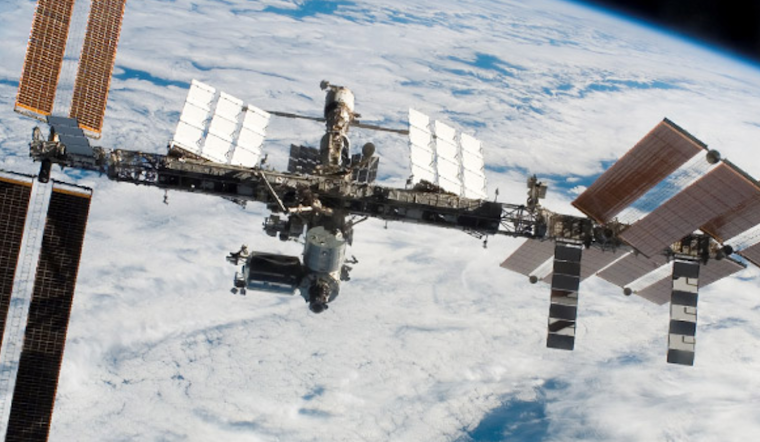
The International Space Station just got a stay of execution, and the moon is back on Washington's to-do list.
On Wednesday, the Senate Commerce, Science, and Transportation Committee approved a sweeping NASA reauthorization that would push the International Space Station's planned retirement back two years and direct NASA to begin work on a permanent moon base. The move sets up a fast-moving policy fight in Congress over funding, timelines, and the future of the Space Coast's launch and research economy.
The committee's measure, an amendment like a substitute to S. 933, would authorize about $24.7 billion for fiscal 2026 and $25.3 billion for fiscal 2027, extend the ISS operating authority to Sept. 30, 2032, and instruct NASA to "establish a permanent Moon base" as part of a sustained lunar presence. It would also allow NASA to transfer operations from the ISS to one or more commercial space stations once a private platform has demonstrated the capabilities to support research, technology development, and national laboratory functions for a full year. The bill requires NASA to evaluate crew-rescue capabilities for both orbit and lunar missions, according to the Senate Commerce Committee.
The House Science, Space and Technology Committee passed a companion reauthorization (H.R. 7273) on Feb. 4, 2026, leaving Congress with the usual next step: reconcile differences between the chambers and send a final bill to the president, according to the House Science Committee. Local coverage on Florida's Space Coast reported that the proposal could affect Kennedy Space Center operations and companies developing commercial station hardware, including Axiom Space, as noted by MyNews13.
What It Means For The Space Industry
Extending the ISS through 2032 is meant to give private providers more runway to finish and certify station hardware while NASA transitions toward commercial low Earth orbit platforms. Industry analysts say companies such as Axiom, which has contracts to attach modules to the ISS and is building commercial station elements, stand to gain time to complete modules and attract customers, according to Scientific American. Investors and engineers will be watching whether the extra runway is enough for private platforms to demonstrate continuous, research-grade operations.
What's Next In Congress
Committee leaders framed the vote as bipartisan and strategic. "For the first time, our bill establishes a program to develop a permanent Moon base," Sen. Maria Cantwell said in opening remarks before the committee approved the measure, according to the Senate Commerce Committee. The measure now faces full Senate consideration and further negotiations with the House before it could become law.
Back on the Space Coast, local outlets said NASA and private companies have not yet offered formal reactions to the committee's action, and that thousands of workers and dozens of suppliers will be watching the next procedural steps in Washington. Spectrum News' MyNews13 reported that committee passage is only the first step; full congressional approval and the president's signature would be required to lock in the changes, and Florida's launch and research communities are watching closely.



