

























































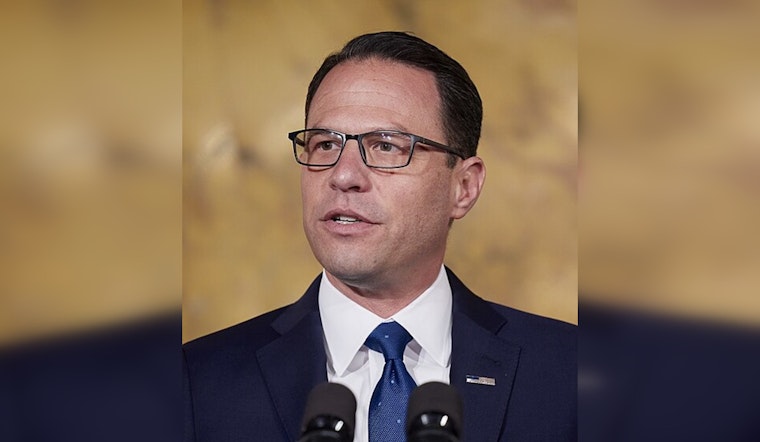
Gov. Josh Shapiro is pushing a change that would widen the safety net for Pennsylvania’s first responders, extending workers’ compensation and death benefits to those deployed by the Commonwealth during declared disasters. The proposal, tucked into his 2026–27 budget plan, would cover firefighters, EMS crews and police officers sent out on state deployments under a Governor’s Emergency Declaration. It is framed as the next step after last year’s reforms that made it easier for first responders to claim benefits for post-traumatic stress injuries.
Budget would extend protections during state deployments
Shapiro’s 2026–27 budget proposal explicitly lays out a plan to “provide death and workers’ compensation benefits to first responders while deployed by the Commonwealth during a disaster emergency under a Governor’s Emergency Declaration.” The same budget pitch pairs that promise with a $30 million increase for competitive grants to volunteer and career fire companies, along with other public-safety investments, signaling that the administration is bundling the benefit changes into a broader first responder package, according to PA.gov.
Act 121 loosened the bar for PTSI claims
In 2024, lawmakers passed Senate Bill 365, which was enacted as Act 121 of 2024 and reshaped how post-traumatic stress injuries are handled for first responders. The law removed the old requirement that firefighters, EMTs and police officers prove “abnormal working conditions” in order to qualify for workers’ compensation related to post-traumatic stress injuries. The Office of the State Fire Commissioner says that provision took effect Oct. 30, 2025 and now allows PTSI claims tied either to certain qualifying traumatic events or to cumulative exposures, as outlined by Office of the State Fire Commissioner. The bill’s legislative record is available on the Pennsylvania General Assembly’s site for Senate Bill 365, according to Pennsylvania General Assembly.
Unions and chiefs say it is overdue
Fire service leaders and unions embraced the PTSI changes, and many see the new budget language on disaster deployments as the logical follow-up. “This law ensures that firefighters and other first responders no longer have to suffer in silence,” Bob Brooks, president of the Pennsylvania Professional Fire Fighters Association, said in a statement carried by Office of the State Fire Commissioner. Local officials say extending workers’ compensation and death benefits to state deployments could matter most for volunteer companies that roll out to help during floods, wildfires and other large disasters.
Insurers warn of modest cost increases
After Act 121 passed, the Pennsylvania Compensation Rating Bureau filed actuarial updates estimating the law’s overall impact at about 0.13 percent of system costs. The bureau also projected larger adjustments for some specific job classes, including a 12.7 percent change for salaried ambulance services, to be phased in as experience develops, according to Pennsylvania Compensation Rating Bureau. The organization described the targeted increases as temporary moves intended to “bridge the gap” until more data comes in under the expanded coverage.
What comes next
For now, Shapiro’s plan is still just that, a proposal. The budget needs approval from the General Assembly, and even if lawmakers agree, the new deployment protections would still require detailed policy writing and funding decisions before they become reality. CBS Philadelphia has already highlighted the administration’s push in a short segment, and fire service groups have flagged the language as something to press legislators on, according to CBS News Philadelphia and Western Pennsylvania Firemen’s Association.
As budget talks unfold this spring, the unresolved question is how quickly state leaders can turn that budget language into on-the-ground protections, so responders who get hurt while answering a statewide call for help are covered not just in spirit, but on paper and in their paychecks.





