

























































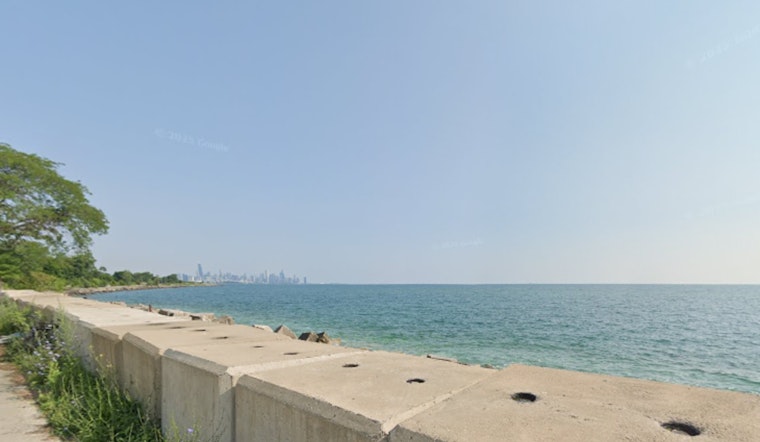
Neighbors and environmentalists on Chicago’s South Side are scrambling to protect Morgan Shoal, a rare nearshore bedrock reef just off the Hyde Park shoreline, after federal shore-protection plans floated new breakwaters, armor stone, and revetments along the lakefront between 47th and 51st streets. The proposal, part of a decades-long push to stabilize the shoreline and shield DuSable Lake Shore Drive, has quickly become a flashpoint for locals who fear it could smother a one-of-a-kind habitat and reshape both the pebble beach and the rusting boiler from the 1914 Silver Spray shipwreck that sometimes peeks above the water near 49th Street. The fight has pulled scientists, park planners, and community advocates into a tense debate over whether coastal defense can realistically coexist with conservation.
According to reporting from the Chicago Tribune, early concept drawings discussed by the U.S. Army Corps of Engineers and city partners feature new breakwaters and revetment work along the 47th-to-51st Street stretch of Burnham Park. Those concepts follow months of planning meetings as city agencies and the Corps move the designs into the formal federal environmental review process.
What Morgan Shoal Is, and Why It Matters
Morgan Shoal is a dolomitic limestone bedrock shelf that juts into the shallow waters of Lake Michigan, creating a calmer, biologically rich habitat that is hard to find along Chicago’s otherwise heavily armored shoreline. The U.S. Army Corps' draft supplemental environmental assessment, which incorporates a Shedd Aquarium survey, highlights the shoal’s role in reducing wave energy and documents species such as the state-listed mudpuppy using the nearshore rubble habitat, according to the U.S. Army Corps of Engineers. Those same shallow rocks helped doom the passenger steamer Silver Spray in 1914, and the ship’s rusted boiler still punctuates the water offshore around 49th Street when conditions are right.
What the Plan Would Change Along the Shore
The Public Building Commission’s project page describes design alternatives that include rubble-mound revetment, an expanded pebble beach, stepped stone seating, and a transitional concrete and sheet-pile section near 51st Street. Designers say the package is meant to protect parkland while adding roughly two acres of usable shoreline, raising portions of the lakefront trail, and carving out new lookout points at 47th and 51st Streets. The PBC also emphasizes that the current proposal does not call for placing fill directly on the shoal and that many existing limestone blocks would be salvaged and reused, even as taller shoreline protection would alter sightlines along DuSable Lake Shore Drive; the Public Building Commission project page lays out those details.
Neighbors And Advocates Push Back
At public meetings, Hyde Park neighbors have complained that the outreach has felt too limited, with one participant telling planners “you are failing to grasp the way we feel” and describing the shoal as “a sacred place” that should be preserved. Local organizers, including Advocates for Morgan Shoal, have held events and mobilized residents to demand different options, while community fundraising has helped pay for legal review and design ideas that put habitat retention at the center; Advocates for Morgan Shoal outlines those efforts. Reporting by Block Club Chicago captured neighbors’ concerns about long-term maintenance, the transparency of the process, and the cultural significance of the site.
Environmental Review And Protections
The project is now moving into formal NEPA review and will also undergo historic-preservation scrutiny because of the natural and cultural resources packed into this short stretch of lakefront. Agencies say final designs will not be released until those analyses and public comment periods are finished. The Shedd Aquarium study, folded into the Corps’ appendix, recommends specific habitat enhancements for mudpuppies and calls for pre- and post-construction monitoring to limit ecological damage, a recommendation highlighted in the Corps’ draft assessment. State and federal reviewers have already identified sensitive areas around the shoal as the Corps prepares its supplemental analysis, and the Morgan Shoal planning materials explain how the public can track updates and submit comments as the review moves forward.
What Happens Next
Officials say there is still no target start date for construction, and PBC materials estimate that once work does begin, it could take about three years to complete. The NEPA process will include a formal notice of availability and a public comment window, with previous reporting indicating a typical 45-day comment period once that notice is posted. For anglers, birders, and neighbors who treat the shoal as an outdoor classroom and informal dive site, those bureaucratic steps will have real-world consequences for whether Morgan Shoal stays the rare pocket of nearshore nature it has long been.
Whatever design ultimately moves ahead, the fight over Morgan Shoal has sharpened a larger question for Chicago’s lakefront: can engineers build durable shoreline protection without wiping out the ecological quirks and cultural landmarks that make the South Side shoreline distinct in the first place? The outcome will hinge on what planners are willing to change, what federal reviewers insist on, and how persistently the surrounding neighborhoods press their case.





