

























































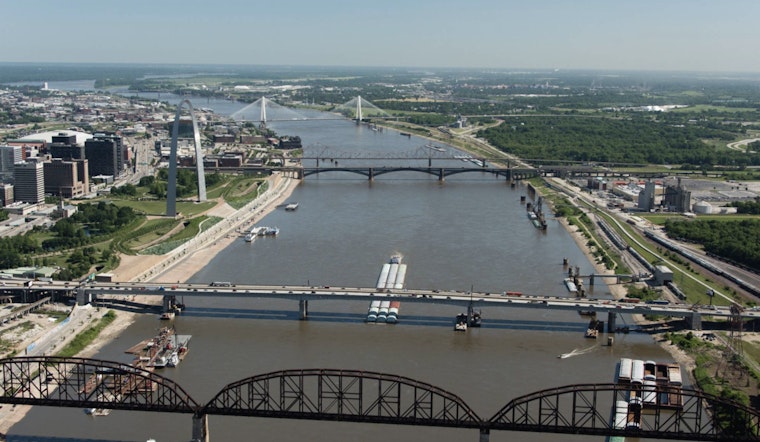
The White House's America’s Maritime Action Plan, released in February, puts inland waterways squarely on the national priority list and flags shipbuilding, repair and maritime manufacturing as prime targets for federal dollars. Port leaders around the bi-state St. Louis region say that roadmap could channel new capital and jobs into riverfront yards and fabrication sites that already serve as workhorses in the nation’s supply chains. For a metro where busy river terminals sit next to rail lines and interstate highways, supporters argue the MAP could recast the Mississippi as a hub for domestic maritime industry, not just a corridor for bulk cargo.
What the MAP actually proposes
The MAP is built around four big strategic pillars: rebuilding U.S. shipbuilding capacity, overhauling workforce training, protecting the maritime industrial base, and tying maritime policy more tightly to national security. It also explicitly backs place-based incentives aimed at ports and shipyards. According to The White House, the plan would create Maritime Prosperity Zones, expand shipyard financing tools and trim regulatory hurdles that slow dredging, permitting and repair projects. The same document points out that the United States currently produces less than one percent of new commercial ships, a data point federal officials use as a warning light and a rationale for rapid intervention.
Why St. Louis is in the conversation
Recent data and local reporting paint the St. Louis metro as unusually dense and efficient on the river. In 2022, the region handled 369,309 tons per river mile, and five ports together moved nearly 26 million tons along roughly 70 miles of the Mississippi, according to FreightWaves. Regional advocates point to large blocks of industrial land, strong rail and highway connections and a deep manufacturing bench as reasons the area could credibly host ship repair work and modular fabrication. A local analysis estimated that manufacturing workers here are about 18.3% more productive than the national average, RiverBender reported, a statistic regularly cited by those arguing St. Louis should be first in line for the capital and tax incentives the MAP describes.
Port leaders weigh in
"As leaders of the ports within the St. Louis Regional Freightway, we stand united and ready to partner with federal, state and private-sector stakeholders," local port officials wrote, signaling that they see the region as ready to move quickly if new funding appears, as reported by RiverBender. America’s Central Port, led by Executive Director Dennis Wilmsmeyer, operates an industrial campus of roughly 1,200 acres that port officials say offers the kind of open space and rail connectivity large projects require, according to America’s Central Port. Nearby Kaskaskia Regional Port District has been on a growth streak as well. The Waterways Journal reported that KRPD surpassed 2.5 million tons in 2025, a benchmark that local officials cite as proof southern Illinois river terminals are building momentum.
How the plan could change local projects
If Maritime Prosperity Zones are formally designated and the MAP’s financing tools are put in place, backers say inland repair yards and modular fabrication shops could pencil out in ways that have not been possible before. The plan sketches out new shipyard capital improvement programs and calls for tax-deferred reinvestment accounts that would be available to yards and their suppliers, according to The White House. At the same time, legal advisories warn that possible new fees on foreign-built vessels and shifts in cargo-preference rules would alter shipping economics and spark complicated trade debates, as explained by Holland & Knight. That mix of carrots and potential friction is exactly what local port officials hope will ultimately draw long-term private investment into riverfront manufacturing and repair operations.
Next steps and timing
The MAP directs federal agencies to coordinate the selection of Maritime Prosperity Zones and to revisit how navigation, dredging and permitting are handled. Many of the marquee ideas will still need congressional approval and detailed agency rule-making before any significant money reaches the water. Industry and legal observers expect the administration to package legislative proposals with the FY2027 budget request and to rely on agencies such as MARAD, the U.S. Army Corps of Engineers and the Office of the U.S. Trade Representative to carry out the plan, according to analysis by Norton Rose Fulbright. For the St. Louis region, that translates into a near-term stretch of outreach, grant-writing and project design before any new yards or major retrofits show up along the river.
Local leaders say that the tight cluster of terminals, rail lines and industrial land around St. Louis gives the region a head start, even if the race will be a long one. Turning a federal strategy document into bricks, steel and shipyard paychecks will still require time, reliable funding and policy that survives election cycles. Port executives and economic development officials say they are already sketching out projects and building contact lists, and they now plan to push aggressively for MPZ designations and the specific financing tools that the MAP puts on the table.





