

























































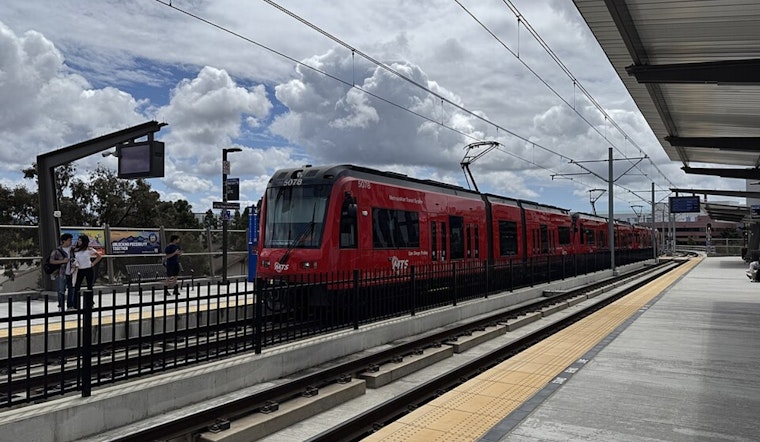
California is sending more than $60 million San Diego's way to tune up the trolley and roll out new electric-bus gear, setting up a summer construction season that will reach both the Orange Line and the Metropolitan Transit System's Kearny Mesa bus yard. The work will focus on signal, track and grade-crossing fixes on the Orange Line and the first overhead-charger infrastructure at the Kearny Mesa bus division, with crews planning staged construction so trains and buses can keep moving while older equipment gets rebuilt.
The San Diego Metropolitan Transit System said the state awarded $60.4 million through the Transit and Intercity Rail Capital Program - about $48.3 million for Phase 2 of the Orange Line Improvement Project and $12.1 million for phase 1 of electrifying the Kearny Mesa Division, according to MTS. "The projects funded will strengthen safety, reliability and sustainability," MTS Board Chair Stephen Whitburn said in the release. Phase 2 builds on earlier Orange Line work funded in 2022, the agency noted.
Clarissa Reyes Falcon, chair of the California Transportation Commission and a San Diegan, said the award will deliver more reliable service, cleaner vehicles and better infrastructure for riders, as reported by Times of San Diego. That coverage notes construction on the Kearny Mesa overhead chargers is expected to begin in June 2026, with Orange Line Phase 2 work slated for July 2026.
What the money will fund
Phase 2 of the Orange Line Improvement Project will focus on the stretch from Massachusetts Station through the El Cajon Transit Center, adding grade-crossing safety upgrades, universal interlocking crossovers, replacement of aging signal interfaces and other track, signal and communications improvements. The Kearny Mesa Division award covers new 12 kV electrical service, a gantry-style overhead charging system and backup power to support the first 30 battery-electric buses. Those elements and dollar amounts are outlined in the MTS news release.
Why the state invested
The grants come from California's Transit and Intercity Rail Capital Program, funded by the Greenhouse Gas Reduction Fund and aimed at projects that cut emissions, boost ridership and benefit disadvantaged communities, according to CalSTA guidance. State officials have pushed Transit and Intercity Rail Capital Program dollars toward projects that modernize signals and depot infrastructure because those changes can yield immediate reliability and emissions gains. Local agencies often pair Transit and Intercity Rail Capital Program awards with federal and local funding to expand the scope of upgrades.
MTS has asked the California Transportation Commission to allocate the awards so work can proceed on the announced timetable, Times of San Diego reported. Agency staff say construction will be staged to limit rider disruptions, and officials plan to publish schedules and detour plans as contracts are awarded. Riders are being urged to keep an eye on MTS service alerts and schedule updates as crews prepare to begin work this summer.





