

























































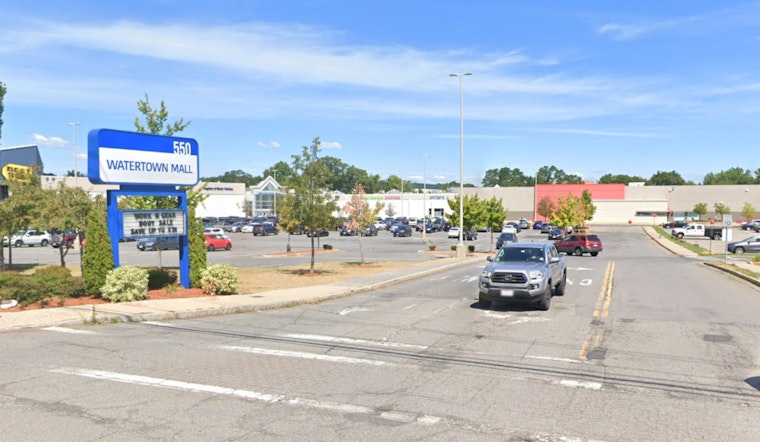
Investors spent 2025 quietly cozying back up to Boston-area brick-and-mortar, scooping up well leased shopping centers and strip centers that throw off reliable income. The buying spree signals at least a timeout in the rush to remake suburban retail into life science campuses and suggests many buyers now prefer predictable rent checks over high-octane speculation.
Retail property sales across the Boston region reached about $1.8 billion in 2025, marking a third straight year of gains, according to CoStar. That total was a little more than 3% higher year over year and roughly 13% above the market's 2023 post-pandemic low. CoStar also reports that investor interest has held broadly steady in recent years, even if overall deal volume still trails the pandemic-era peaks.
Suburban malls sneak back into the spotlight
One of the clearest signs of the shift was the sale of the Watertown Mall at 550 Arsenal St., a 260,867-square-foot center that Alexandria Real Estate Equities bought in 2021 for $130 million and later sold to National Development. County records and local reporting put the resale price at roughly $100 million, about $100.25 million in public filings, according to The Boston Globe.
CoStar reports the mall was about 96% leased at the time of sale, with national anchors including Target, Best Buy, Starbucks and Ulta Beauty. That healthy rent roll helped make it one of Greater Boston's largest retail trades of 2025 and a tidy example of how strong occupancy can still draw institutional capital even while other property types wobble.
Financing and what comes next
On the financing side, JLL Capital Markets lined up an $83.02 million acquisition loan for National Development through Wells Fargo, a sign that lenders will still lean in on stabilized retail when the income story is convincing, according to a JLL release. National Development's chief investment officer told The Boston Globe the firm plans to "make improvements and operate it as a first-class shopping center" while it weighs longer-term options for the property.
Why this matters for developers and buyers
CBRE's fourth-quarter data shows lab vacancy in Greater Boston climbing into the mid to high 20% range as a wave of speculative projects hits the market, a shift that has dulled the financial appeal of turning shopping centers into lab space. That backdrop has made stabilized retail, especially well occupied centers with creditworthy tenants, a more attractive bet for many buyers, market coverage indicates.
As Boston Real Estate Times framed it, the Watertown deal highlights a broader recalibration across Greater Boston's commercial landscape, with capital tilting toward dependable income rather than speculative redevelopment plays. For now, that points to shopping-anchored centers, and the national chains that fill them, remaining prime targets for investors until either capital markets or lab demand find a new equilibrium.





