

























































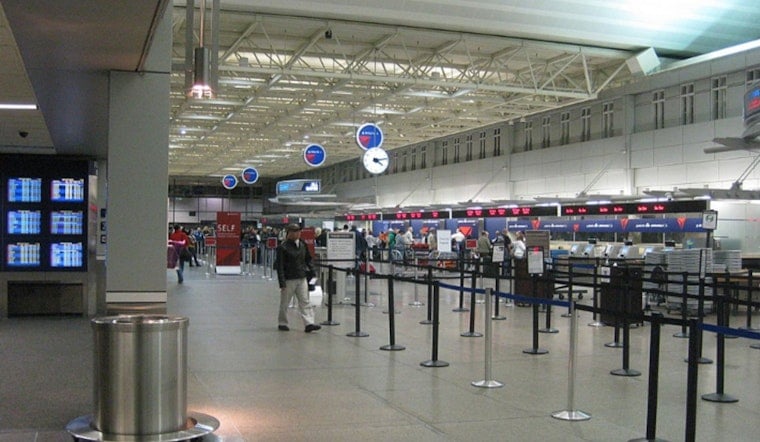
State lawmakers zeroed in on Minneapolis-St. Paul International Airport on Monday, after a legislative fraud committee heard that suitcases loaded with cash have been routinely leaving town. Testimony laid out how roughly $342 million in currency was flagged in 2024 and another $349 million in 2025, totals officials say far exceed what is typically seen at other major U.S. airports. The revelations sharpened concerns that proceeds of fraud may be getting converted to cash and flown overseas, and raised fresh doubts about how much a state panel can really do to stem the flow.
During the hearing, committee members walked through testimony and public statements about the outbound cash, according to KARE11. Lawmakers were told of a TSA bulletin and related reporting that said roughly $350 million left MSP in 2025, and that screening flagged nearly $700 million in declared U.S. currency leaving MSP across 2024 to 2025, per reporting by Just the News. Panel members pressed airport police and state budget officials for harder numbers and for clearer lines of authority on who can actually step in when a suitcase full of cash raises suspicions.
Federal response and new scrutiny
In January the U.S. Department of the Treasury rolled out a set of actions meant to trace suspicious money flows tied to Minnesota fraud investigations, including probes into several money-services businesses and a geographic targeting order that requires enhanced reporting on certain international transfers, according to the U.S. Department of the Treasury. Federal officials say the goal is to build the bank and money-service business records investigators need so they can follow the money trail after it leaves U.S. soil. Treasury officials and prosecutors have framed the moves as part of a broader push to link airport screening flags with detailed financial data so cases can move from simple detection to actual disruption.
What the law requires
Under federal law, travelers must file a FinCEN Form 105 with Customs and Border Protection when they carry more than $10,000 in currency or monetary instruments across the U.S. border, a reporting rule intended to help investigators spot suspicious flows, per FinCEN. At the hearing, airport and police representatives emphasized that simply declaring cash does not prove the funds are clean, and that routine inspections often find declared currency that cannot be immediately connected to specific fraud cases, according to KARE11. KARE11 also notes that, to date, no criminal charges have been filed that directly tie the massive outbound cash totals to a single prosecution.
What investigators say comes next
Panel members called for quicker federal subpoenas and more aggressive interagency data sharing so that screening alerts can be turned into specific, traceable financial leads instead of dead-end statistics. National lawmakers have signaled interest after similar reporting, and Sen. John Cornyn has floated legislative remedies while congressional committees in Washington have opened oversight on Minnesota fraud, as reported by FOX 9 and House Oversight materials. For now, officials say the priority is to assemble a detailed paper trail that connects declared cash to particular accounts, businesses or transactions that could ultimately justify seizures or indictments.
The hearing made clear how a local fraud probe can quickly spill over into global money flows and expose the limits of current tools for tracking physical cash. For Twin Cities residents, the unresolved issue is whether federal agencies can turn airport screening data and stepped-up bank reporting into concrete, court-ready cases instead of headline-grabbing totals. Lawmakers walked out effectively asking federal partners for the same thing many constituents now want to see: the money's paper trail.



