

























































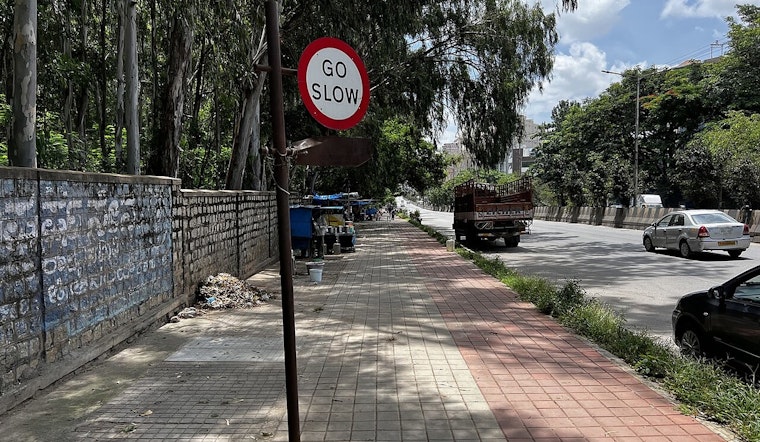
Tampa’s long-running battle over broken-up, dead-end sidewalks is headed back to City Council, where a small tweak to the city code could have a big impact on how new walkways get built. The proposal would close a loophole that has let builders skip installing sidewalks in certain situations by cutting a check instead, leaving blocks that abruptly end in grass, curb or ditch.
Supporters say tightening the rule would finally start stitching those gaps together, making it safer and more practical for people who walk, bike or roll to actually get where they are going without playing dodge-the-traffic.
What the council will vote on
The change is wrapped into an amendment to Section 22-103 of the city code, which governs when developers can pay into a sidewalk fund instead of pouring concrete on-site. According to a Business Impact Estimate from the City of Tampa, the amendment would scrub out the “impracticable” test that staff currently use to decide whether a builder can opt for the in-lieu payment.
As reported by Tampa Bay 28, the item is on the agenda for a City Council meeting Thursday. City staff say that without the “impracticable” escape hatch, there would be fewer situations where a builder can write a check instead of putting in a sidewalk along the property.
Why advocates back the change
The city’s mobility office estimates Tampa has about 1,300 miles of streets with no sidewalks at all, a shortfall that safety advocates say leaves a lot of residents walking in the gutter or the grass, according to the Sidewalks program run by the City of Tampa. For them, every little stretch of new concrete is a long-term investment, even if it looks pointless at first glance.
Emily Hinsdale, who leads the advocacy group Sidewalk Stompers, told Tampa Bay 28, “We should be planning for tomorrow, not for today,” arguing that deleting the exemption would nudge developers to build sidewalks even when the block does not yet connect to anything. In the advocates’ view, that is how you turn today’s lonely slab into tomorrow’s continuous route.
Neighbors push back
Some homeowners see the proposal very differently. In Culbreath Bayou, residents have launched a petition on Change.org urging council to leave the exemption alone, or at least to carve out a special area-wide ruling for their neighborhood.
The petition argues that forcing short, isolated sidewalk segments into a built-out, low-traffic enclave with “no existing sidewalk infrastructure” would do more harm than good. Residents warn of potential impacts to drainage, established landscaping and the overall look and feel of the neighborhood, and say they do not see a safety payoff that justifies tearing up yards and swales.
Money and past attempts
Even before this code tweak, sidewalk advocates have been frustrated with the way the in-lieu option works, especially the price. Reporting last year found that Tampa’s in-lieu fee sat at $29 per linear foot, while groups like Sidewalk Stompers argued the rate should be closer to $220 per foot to reflect real-world costs, according to Spectrum News.
Those costs add up fast. City estimates put new sidewalk construction at roughly $750,000 per mile, and filling every identified gap on both sides of all streets would run around $975 million, according to the Sidewalks program from the City of Tampa. With a backlog that big, the question of who pays for each new stretch of concrete is hardly academic.
What comes next
The ordinance language was posted by the city in February, and the measure is scheduled for a second reading on March 26, 2026, according to city documents. If council signs off, staff and advocates say the tightened rules would mean fewer builders qualify to pay into the sidewalk trust fund instead of laying sidewalks themselves, shifting more of the construction burden from the city’s overstuffed to-do list onto private projects as they come up.



