

























































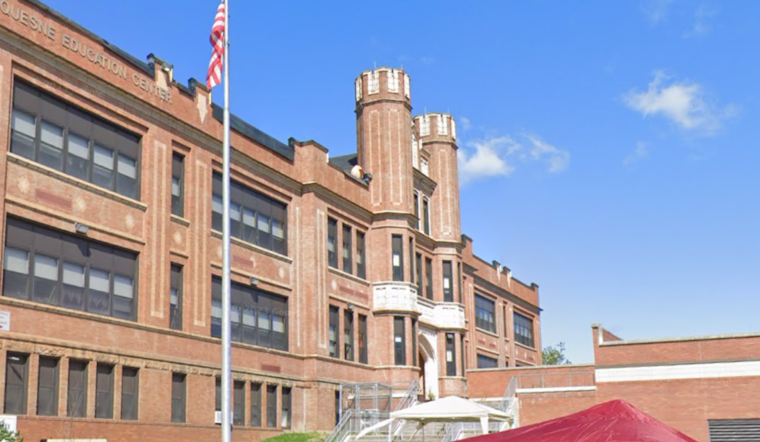
For families in Duquesne, the question of which district their kids will call home is suddenly up in the air. State education officials have launched a formal review of whether the tiny Duquesne City School District should be merged into a neighboring system, a move that could reshape where Mon Valley students go to class. The feasibility review will dig into enrollment, finances, and potential partnerships with nearby districts that already educate Duquesne students. Parents and municipal leaders say the prospect has stirred concern and uncertainty over class sizes, special-education services, and the future of Duquesne’s local school identity.
As first reported by CBS Pittsburgh, the Pennsylvania Department of Education has been asked to determine whether Duquesne can sustain independent operations or whether consolidation would make more sense. The department is expected to provide its recommendation to state legislators before June 30. The direction to study Duquesne stems from recent changes to the School Code, and Pennsylvania General Assembly materials on Section 1607 say PDE must assess the educational, financial, administrative, and community impacts of consolidation. State officials stress that no final decision has been made and say the review is meant to carefully weigh all options, not rubber-stamp a closure.
The Duquesne district has a long paper trail of fiscal struggle. A Pennsylvania Auditor General performance audit notes that the district was certified as financially distressed in October 2000. By the 2007–08 school year, the district no longer operated a high school, with older students sent to neighboring systems instead. The audit also records that middle-grade students began attending other districts as part of cost-cutting measures around 2012. The district’s own Duquesne City School District recovery plan describes continuing efforts to stabilize finances, restore services, and focus on student supports while the feasibility work proceeds.
Many Duquesne secondary students already attend West Mifflin or East Allegheny, and some parents worry that full consolidation could stretch classroom resources even thinner. "They're going to merge all of these kids together," West Mifflin parent Lenay Somerville told CBS Pittsburgh. Local reporting also shows West Mifflin is participating in the state review and that community members can submit feedback online, according to the Mon Valley Independent.
What the Review Will Examine
The feasibility study is tasked with analyzing enrollment trends, per-pupil costs, transportation implications, special-education capacity, and the broader community impact. That remit is laid out in Section 1607 of the School Code, detailed in Pennsylvania General Assembly documents, which require the department to evaluate educational, financial, administrative, and community effects and to analyze at least three nearby districts as options. Consultants leading the work will model scenarios that show how consolidation, if it is ultimately recommended, would affect budgets, staffing, and services.
Next Steps and How Residents Can Weigh In
The process will include outreach to families, staff, and elected officials, with district leaders and neighboring systems asked to participate in data collection and meetings. West Mifflin, which already educates many Duquesne students, is listed among districts taking part, and local reporters note that "anyone connected to the district" can submit responses online, according to the Mon Valley Independent. Lawmakers and PDE officials say they will consider the study’s findings before any statutory or budget moves are made, so the report will carry real weight.
District officials say they are actively participating in the review while continuing to run the K‑8 program and pursue the recovery plan’s goals to improve instruction and fiscal transparency. The Duquesne City School District recovery plan outlines those priorities and lists ongoing audits and budgets that officials point to as evidence of steadying finances. As the spring progresses, families in Duquesne and neighboring towns should expect more public meetings and data releases before any final recommendation is acted on. In other words, the fight over Duquesne’s future is only just getting started.



