

























































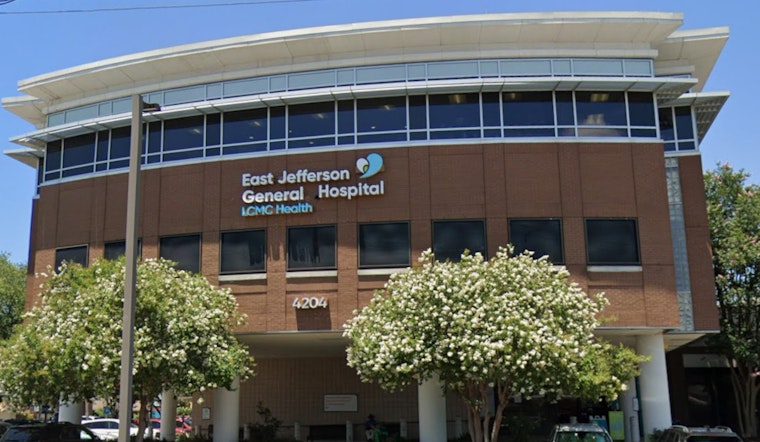
Louisiana patients battling a rare eye cancer no longer have to cross state lines for a highly specialized treatment. Doctors in the New Orleans area are now offering an implant based radiation procedure that can save eyes and control uveal melanoma, marking the first time this therapy has been available in the state. The treatment gives many patients a shot at preserving their eye and lowering the risk that the tumor returns, all without leaving Louisiana. The first local patient was a 60-year-old man from Houma who received the therapy at East Jefferson General Hospital.
According to WWLTV, the procedure, called ophthalmic plaque radiotherapy, was performed by Dr. Paul Finger on Marvin DeHart, and the small gold plaque was removed after about a week. The report says LCMC Health partnered with Tulane to bring the therapy to East Jefferson, closing a regional gap that had forced Gulf South patients to travel for ocular oncology care. The station describes the plaque as a metal disc containing radioactive seeds that delivers concentrated radiation to the tumor while sparing surrounding structures.
LCMC and Tulane Expand Specialty Cancer Services in Metairie
Per LCMC Health, East Jefferson’s Tulane Cancer Center lists radiation oncology, infusion therapy and multidisciplinary oncology clinics at 4204 Houma Blvd. The Cancer Center is accredited by the Commission on Cancer and provides the infrastructure needed for advanced radiation treatments and follow up care. Bringing plaque radiotherapy to Metairie is part of a broader push by LCMC and Tulane to keep complex care closer to patients in the Gulf South.
How the Treatment Works
Plaque brachytherapy involves placing a metal plaque loaded with radioisotopes against the outside of the eye for a prescribed dose and duration so the tumor receives high radiation while nearby tissues get much less. Clinical research and reports in publications such as JAMA Ophthalmology document plaque therapy with isotopes like palladium 103 or iodine 125 as an eye sparing option with strong local control outcomes. Ophthalmic oncologists use intraoperative imaging and careful dosimetry to position the plaque and limit side effects.
The first patient treated locally, 60-year-old Marvin DeHart of Houma, told reporters he "now hardly wore sunglasses" and keeps dark glasses in his pocket, according to WWLTV. The station reports the gold plaque was removed after roughly one week and quotes Dr. Finger saying the procedure achieves about a 99.2 percent rate of local tumor control for tumors that do not regrow. Doctors involved also urged sun protection and recommended dilated eye exams every one to two years so small eye tumors can be detected early.
Why This Matters for Patients
Having plaque radiotherapy available at East Jefferson reduces the travel, cost and logistical burdens for patients who previously had to go to distant ocular oncology centers for treatment. It also shortens the time between diagnosis and treatment, which can be critical for outcomes. Per LCMC Health, the East Jefferson Cancer Center is accredited and equipped to provide radiation oncology and multidisciplinary follow up care close to home.





