

























































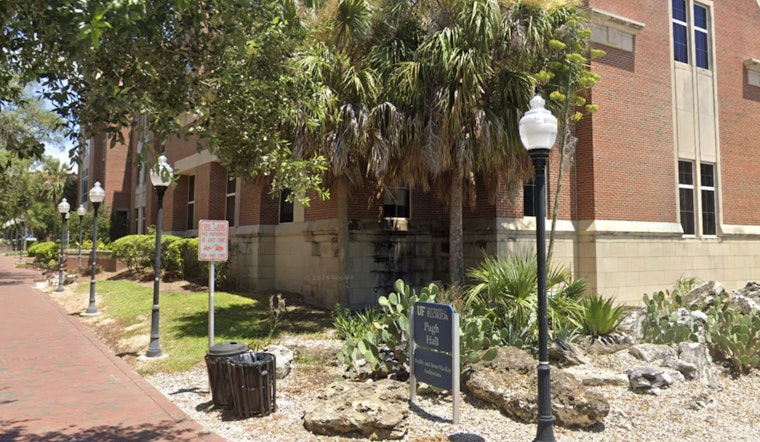
The University of Florida has removed language from a Spring 2026 art syllabus after administrators concluded that a section of the course materials appeared to offer special accommodations to “queer and trans students” and “BIPOC students.” The wording surfaced in Workshop for Art Research and Practice (WARP), a foundations studio course in the art and design curriculum. College of the Arts leaders say the language came from an older document and was stripped out to keep the class in line with state rules.
What the syllabus said
According to the Free Beacon, the syllabus included an "Accessibility, Diversity & Inclusion" section that went beyond standard disability language. It suggested that "access riders" — documents artists sometimes use to request accommodations — could be used not only by neurodivergent and disabled students, but also by "queer and trans students, BIPOC students, first-gen students, and students navigating complex lives." The outlet published screenshots from a course PowerPoint that listed sample rider demands and encouraged students to "normalise asking collaborators for access riders."
State rule at issue
Florida's Board of Governors adopted Regulation 9.016 in late 2023. The rule bars state universities from using public funds for programs that provide "differential or preferential" treatment based on traits such as race, sexual orientation, or gender identity. On the Board's active-regulations page, 9.016 appears under the "Prohibited Expenditures" chapter and is cited as part of a broader package that has reshaped compliance expectations across the state. The Board of Governors lists the regulation within that policy framework.
University response
In a statement to the Free Beacon, Steve Orlando, UF's interim vice president for strategic communications and marketing, said the language "was a relic from an old syllabus" and that the college "acted immediately upon learning of it." Orlando said the syllabus has been removed and will be replaced with a version that complies with state law.
Inside the classroom
WARP (Workshop for Art Research and Practice) appears on the College of the Arts' public syllabi pages and regularly shows up in its foundations offerings, which means the removed language was circulating in a gateway course feeding studio and design tracks. The College of the Arts' syllabi index lists multiple recent terms for ART 1803C (WARP), underscoring that this is a standing course, not a one-off experiment.
Why it matters now
The dust-up lands after a sweeping rollback of DEI programs at UF and other state schools following the Board's rulemaking. Reporting in the Washington Post detailed UF's March 2024 move to close its Office of the Chief Diversity Officer, eliminate DEI positions, and redirect that funding toward faculty recruitment. In that climate, a few lines in an art syllabus carry more weight than they might have a few years ago.
Legal implications
The Board regulation explicitly bars public universities from offering "differential or preferential" treatment tied to protected characteristics, which is why administrators flagged the syllabus language. At the same time, federal civil-rights law requires colleges to provide reasonable accommodations to students with documented disabilities under statutes such as Section 504 and the Americans with Disabilities Act. That dual mandate is the tightrope higher-education leaders are walking. Guidance from the Board of Governors and from the U.S. Department of Education's Office for Civil Rights outlines how disability accommodations are supposed to function alongside state restrictions.
Officials did not say whether any "access riders" that students may already have submitted would still be honored, and details on how instructors will be briefed on the updated syllabus rules were not immediately available. For now, the College of the Arts says it has removed the contested language and will issue a corrected syllabus for the course.





