

























































Utah’s top elections official is telling the U.S. Justice Department to back off its demand for the state’s full voter registration database, including some of the most sensitive details Utahns hand over when they sign up to vote.
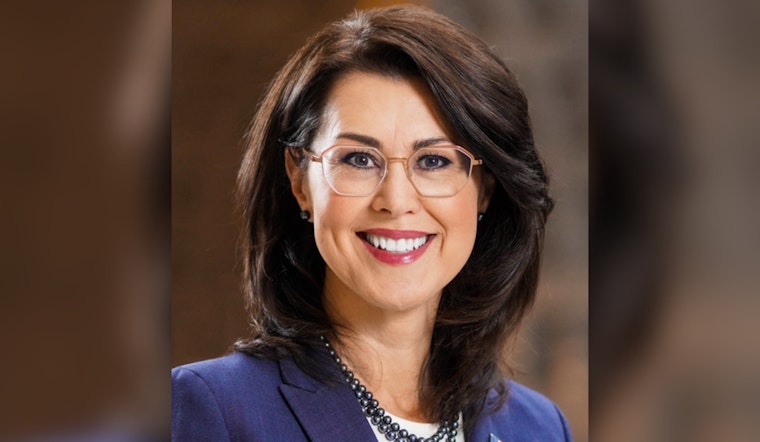
Lt. Gov. Deidre M. Henderson has asked a federal judge to dismiss a Justice Department lawsuit that seeks an unredacted copy of the statewide voter list. In a recent court filing, she argues the federal government has no authority to force Utah to surrender private voter information and says the department has not identified a lawful purpose for scooping up the data.
What the DOJ wants
The Justice Department’s complaint asks the court to order Utah to turn over an electronic copy of the statewide voter registration list with “all fields” visible. That would include voters’ full names, dates of birth, home addresses and either driver’s license numbers or the last four digits of Social Security numbers.
The complaint was filed Feb. 26 in U.S. District Court and signed by Assistant Attorney General Harmeet K. Dhillon of the Civil Rights Division. According to Democracy Docket, the department says it needs Utah’s records so it can review how the state maintains its voter rolls under federal law.
Henderson's defense
Henderson’s legal team fired back in a motion last week, telling the court the Justice Department “demands documents beyond the (Civil Rights Act)’s scope” and has not shown a valid legal basis for its request.
The lieutenant governor has told federal officials that Utah already handed over the statewide voter list in its publicly available, redacted form and that her office has spelled out the state’s voter list maintenance practices. That explanation came in a July 31, 2025, response that is posted on the lieutenant governor’s website.
Her filing also describes a hurried timeline: the Justice Department circulated a proposed memorandum of understanding in December and, according to the state, gave Utah only seven days to sign and begin transferring private voter records. Utah called that turnaround unreasonable, and KSL reported on the state’s arguments.
Legal backdrop
In its complaint, the Justice Department leans on Section 303 of the Civil Rights Act of 1960 and cites provisions of the National Voter Registration Act and the Help America Vote Act as its legal foundation for demanding Utah’s voter data.
Utah’s response tells a different story. The state says those federal laws do not give Washington a blank check to access private voter files and emphasizes that Utah law contains specific privacy protections for that information.
Federal judges in other states have already shown skepticism toward the government’s approach. In January, a federal judge in California labeled a similar demand for voter data “unprecedented and illegal,” a ruling that legal observers say could influence how the Utah court views the Justice Department’s theory. The broader legal landscape is outlined in coverage from the AP and in the statute text posted on govinfo.
Who’s weighing in
Civil rights advocates have stepped into the fray. The NAACP and its Tri-State Conference have moved to intervene in the Utah case, warning that the Justice Department’s effort to assemble state voter rolls into a centralized federal repository would put members’ privacy at risk and make their civic engagement work harder.
In their motion, the groups argue that the department’s push to collect voter lists from across the country would “intrude upon Utah’s constitutional prerogative” over elections and could discourage people from registering or staying active on the rolls. The NAACP filed the intervention papers in the Utah case.
What’s next
For now, Henderson’s motion to toss the lawsuit and the NAACP’s request to intervene are both pending in the U.S. District Court for the District of Utah, where the case is listed as No. 2:26 cv 166.
Over the coming weeks, the Justice Department, the state, and any approved intervenors will negotiate briefing schedules and argue over next steps. Judges in Utah will be watching what happens in related cases, especially the California ruling, as they decide how far the federal government can go in collecting private voter information.





.png)