

























































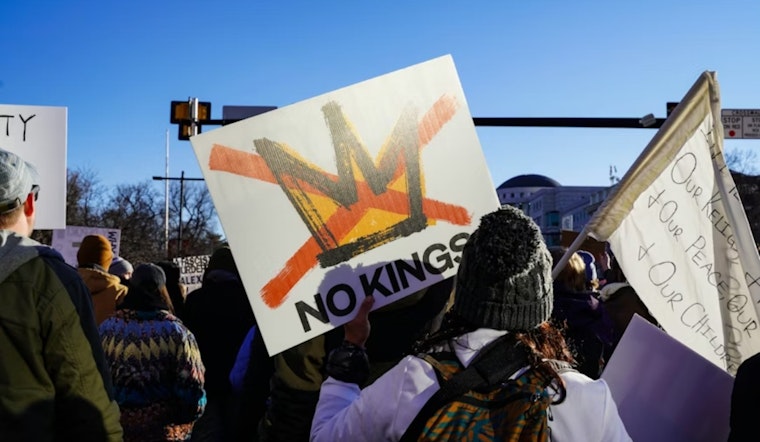
On a Saturday more commonly associated with beach traffic than bullhorns, dozens of rallies and marches unfolded across San Diego County today, as local activists joined a nationwide "No Kings" day of action. Downtown’s Waterfront Park acted as the main hub, while neighborhood contingents convened from Ocean Beach to inland suburbs. Marchers hoisted signs denouncing immigration raids and other federal policies, and organizers cast the day as a collective stand for democratic norms.
Main march at Waterfront Park
The central march, scheduled from 10 AM to noon, kicked off at Waterfront Park with speeches and a mapped downtown route that included family-friendly and themed contingents, according to Axios San Diego. Volunteers and neighborhood groups were told to arrive early and stage near the park’s fountain areas and designated zones to keep the procession organized.
Organizers and partners
A broad coalition of labor, civic and advocacy organizations stitched the San Diego events together. The regional event page listed the San Diego & Imperial Counties Labor Council, Women’s March SD, Indivisible contingents and other partners, according to SD United. That page also provided route maps, a program schedule and volunteer sign-up forms, with specific roles geared toward accessibility support and crowd stewarding.
Local coverage and turnout
KFMB-TV/CBS8 carried live shots and field reports that tracked rallies and marches throughout the county, highlighting scenes from downtown and neighborhood meetups. Reporters on the ground described steady crowds filling Waterfront Park and noted a visible police presence at major intersections as marchers wound their way through downtown. Participants repeatedly echoed core No Kings themes, from opposition to aggressive immigration enforcement to broader concerns about federal overreach.
Part of a nationwide push
San Diego’s actions were one slice of a sprawling national effort that organizers said spanned thousands of events. The Associated Press reported more than 3,100 registered actions across all 50 states, with millions expected to participate. Minnesota was tapped as a flagship site for the day’s demonstrations, drawing high-profile speakers and performers, according to AP News. Organizers framed the coast-to-coast mobilization as a pointed rejection of what they describe as authoritarian policy moves at the federal level.
Security and past protests
City officials and organizers leaned on experience from earlier large No Kings events in San Diego and stressed advance planning and cooperation. Local reporting found that police had previously praised downtown crowds for remaining peaceful and reported no arrests at those demonstrations, according to Times of San Diego. Even with that history, officials pointed to warnings about targeted violence in other places as a factor in their security and stewarding strategy for Saturday. Organizers urged attendees to follow nonviolent guidelines and to keep an eye out for one another.
Legal fallout
The backdrop to the weekend’s marches included a stark legal reminder of what can happen when demonstrations are used as a cover for violence. On Jan. 13, federal prosecutors secured a conviction against a former Navy SEAL who, they said, plotted to transport explosive fireworks to target police at an earlier San Diego No Kings rally, a case authorities held up as an example of the consequences of planning violence around protests, according to AP News. Local leaders repeatedly emphasized that Saturday’s gatherings were intended to be peaceful and that trained volunteers would help steward the marches throughout the day.





