

























































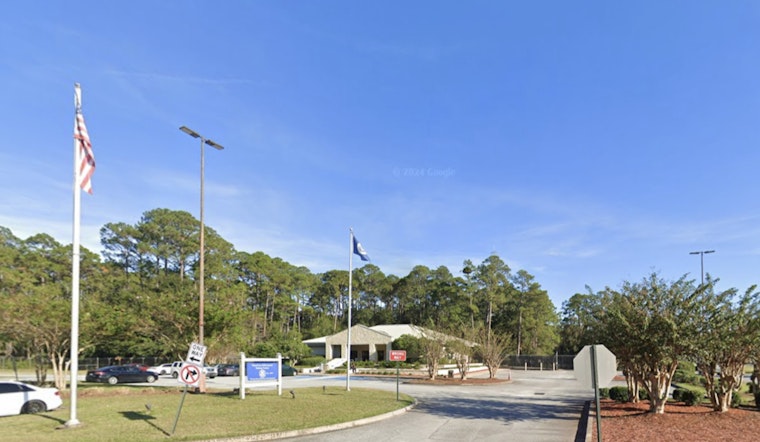
The Federal Law Enforcement Training Centers campus in Glynco, Georgia, the long-running school that prepares ICE officers and recruits from more than 100 federal agencies, has suddenly found itself in a harsh national spotlight. Former instructors say the ICE Academy’s basic curriculum was squeezed into a shorter window and that cadets were hustled through faster than before, leaving holes in firearms, use-of-force and constitutional-law instruction. The Department of Homeland Security and ICE have rejected those accusations, but whistleblowers and internal records have triggered fresh scrutiny from lawmakers and local reporters.
Records obtained by The Washington Post show that ICE’s basic program was shortened from roughly 72 days to about 42 days and that roughly 240 hours of instruction were removed, including practical firearms and scenario training. The Post’s reporting also found that the changes coincided with a steep decline in graduation rates while the agency was ramping up recruitment. Those documents now sit at the center of an argument over whether the hiring surge came at the expense of hands-on training.
Former instructors speak out
In testimony released by Sen. Richard Blumenthal's office, former ICE instructor Ryan Schwank described the basic training program as “deficient, defective and broken.” Schwank later expanded on those concerns in a video interview with The Atlanta Journal-Constitution, saying instructors watched practical lessons and testing get pared back even as the agency pushed to move recruits into field assignments more quickly. The Journal-Constitution also reported that FLETC’s Glynco campus trains recruits for more than 100 federal agencies and has served as a primary ICE training hub for decades.
DHS and ICE push back
Department officials have flatly rejected claims that core instruction was removed. In a statement to The Associated Press, DHS said new recruits receive roughly 56 days of classroom instruction plus an average of 28 days of on-the-job training and insisted that “no training hours have been cut.” Officials said the schedules were streamlined to accelerate deployment without sacrificing subject-matter content and that graduates are monitored while they gain experience in the field.
What the records show
Analysis by The Washington Post includes side-by-side curriculum outlines from July 2025 and January 2026 that appear to remove entire courses and reduce hands-on testing. The Post’s documents indicate that some practical exercises and firearms hours were scaled back and that the reported shift to longer daily instruction was not consistently reflected in internal schedules. According to the same reporting, those changes arrived as ICE sought to expand its workforce quickly for a nationwide enforcement push.
Why critics say it matters
Critics warn that the timing and scale of the changes have real-world consequences. Recent enforcement operations and high-profile incidents involving federal officers have already raised questions about tactics and oversight. Witnesses and lawmakers at the Feb. 23 forum argued that shortened or rushed training could increase the risk of unlawful searches, excessive force and constitutional violations, according to reporting by The Associated Press. Supporters of the new schedule counter that recruits still receive monitored on-the-job mentorship after graduation and that the agency has kept its core instruction in place.
Oversight and what’s next
Senate Democrats have posted whistleblower materials and called for additional oversight, and lawmakers say they will press DHS and ICE for more detailed records and testimony, according to materials released by Sen. Blumenthal's office. Civil-liberties groups and legal experts have urged independent audits of the training changes to confirm that recruits meet constitutional and tactical standards before they are assigned to field duties. More document releases and hearings are expected as oversight teams try to pin down how the academy certifies readiness in the middle of a hiring surge.
For coastal Georgia and communities nationwide, the dispute is less about wonky scheduling charts and more about whether federal officers are being prepared to enforce the law safely and lawfully. Agencies say they are tracking graduates on the job, while whistleblowers and members of Congress argue that the records and testimony to date raise serious questions that, in their view, require independent review.


