

























































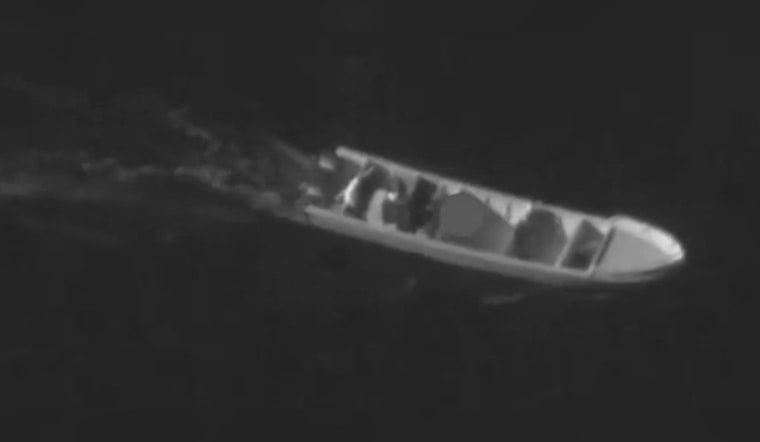
On April 11, the U.S. military fired on two small boats in the eastern Pacific, killing five people and leaving one survivor, according to officials. The attacks are part of a months-long campaign the administration has branded Operation Southern Spear and were promoted with brief aerial clips on official military social media accounts. The latest strikes have once again stirred debate over evidence, oversight and the legal authority to use lethal force on unflagged vessels in international waters.
What the military says
In a post on X, U.S. Southern Command said Joint Task Force Southern Spear, acting on orders from SOUTHCOM commander Gen. Francis L. Donovan, carried out two “lethal kinetic strikes” on the boats. The command described the vessels as being operated by “Designated Terrorist Organizations” and said they were moving along routes the military associates with narco-trafficking. Short video snippets of the engagements accompanied the post. According to the command, two people were killed in the first strike and three in the second, and the U.S. Coast Guard was notified to launch search-and-rescue efforts for the lone survivor.
Casualties and footage
The Pentagon’s statement that five people were killed and one survived was summarized by the Associated Press, which reported that the latest incident brings the publicly reported death toll from similar boat strikes to at least 168. AP noted that while the military has released brief clips showing the explosions, it has not offered independent evidence that the targeted vessels were carrying narcotics.
Search and rescue and video
Southern Command said it asked the U.S. Coast Guard to activate search-and-rescue protocols, and the Coast Guard confirmed it was coordinating the response, according to CBS News. CBS featured Southern Command’s post and embedded the clips, which show small boats skimming across the water in the seconds before each blast. The condition and whereabouts of the survivor were not immediately clear.
Campaign tally and legal questions
Independent trackers and legal experts say the April 11 strikes fit into a broader pattern of lethal maritime operations that began last September. A timeline assembled by Just Security lists dozens of publicly announced strikes across the Caribbean and the eastern Pacific tied to the campaign. Rights groups and several members of Congress argue that follow-on strikes and scant public evidence raise serious concerns under international law. The United Nations human-rights chief has called similar actions “unacceptable,” according to reporting noted by the Associated Press.
Political backdrop
The latest boat attacks land in the middle of a wider security push overseas. On April 13, U.S. Central Command announced plans to begin a blockade of Iranian ports, a move reported by Al Jazeera. At the same time, the administration has told lawmakers it considers some cartels to be “unlawful combatants,” a legal framing examined in detail by The Washington Post that underpins the Pentagon’s claimed authority to hit suspected traffickers at sea.
Oversight and next steps
Members of Congress and human-rights advocates say they intend to push for more disclosures, including underlying evidence, unedited video and legal memos that justify the campaign. Some families have already filed lawsuits over previous strikes, CBS News reported. Hoodline has been tracking the public rollout and legal fallout from the operation; for earlier coverage, see our report on a prior Pacific boat strike in the campaign. Upcoming oversight hearings and any updates on search-and-rescue efforts are likely to play a major role in whether policymakers seek to rein in or redefine Operation Southern Spear.


