

























































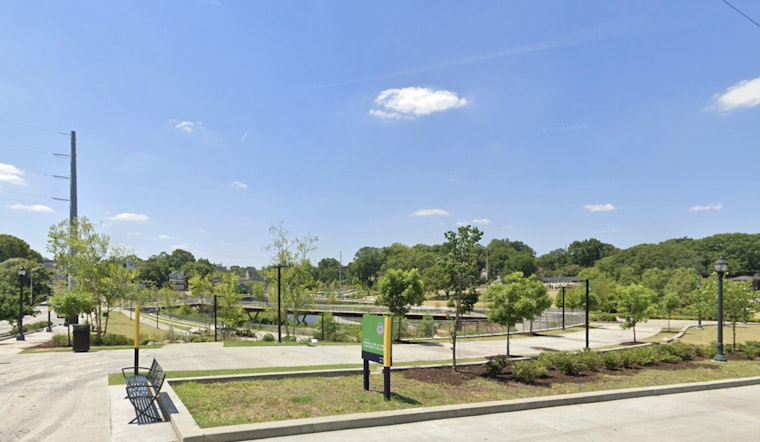
Ambassador Andrew Young’s foundation is eyeing a major Westside statement piece: an 80,000-square-foot, $100 million Andrew Young International Institute for Peace and Reconciliation on a 2.77-acre city parcel overlooking Rodney Cook Sr. Park in Vine City. Plans call for galleries, classrooms, a theater and a research library that would showcase Young’s personal papers, awards and artworks. Foundation leaders say the center would anchor a cultural corridor tied to the civil-rights history around Vine City and the Atlanta University Center, with fundraising already underway and a tentative timeline that could see construction begin in mid-2028 and the doors open by the end of 2029, if everything breaks their way.
City documents describe a neoclassical building, pegged at roughly $100 million, on the 2.77-acre city-owned parcel that looks out over Rodney Cook Sr. Park. The Andrew Young Foundation has asked Invest Atlanta for roughly $2 million to remove sewer pipes beneath the proposed site so it can be made construction-ready, and pending city legislation would lease the land to the foundation for a nominal $1 per year for an initial five-year term with an option to extend the lease for up to 100 years. Councilmember Michael Julian Bond, who grew up nearby, told Axios, "We want to make sure that the message of inclusion, of brotherly love, friendship, all that the movement represents, continues to be reflected in that particular location."
What the foundation says
The Andrew J. Young Foundation casts the proposed institute as a global hub for diplomacy, conflict resolution and civic education, with the building expected to house more than three thousand items from Young’s personal collection. According to the foundation’s website, the center is designed to convene students, scholars and practitioners, pairing rotating exhibits with research and community programming. Foundation materials also point to the project’s potential to draw visitors and philanthropic support while creating local jobs, an economic pitch layered on top of the legacy-driven mission.
Why Vine City
The proposed institute would sit right next to Rodney Cook Sr. Park, a newer Westside green space built both as flood control infrastructure and as a civic showpiece. Park advocates and designers have long talked about cultural institutions surrounding the park, not just walking paths and playgrounds. As reported by SaportaReport, Rodney Cook Jr. and the National Monuments Foundation pushed a broader monument and cultural vision for the site. Invest Atlanta has already used requests for proposals and Westside tax-increment financing tools to steer redevelopment in Vine City, including its Vine City 7.5-acre RFP that lays out public-sector tools for future projects (Invest Atlanta).
Next steps and timeline
Invest Atlanta's board was set to weigh the foundation's $2 million site-preparation request at its April 16, 2026 meeting, and city documents attached to the proposal spell out fundraising and build-readiness benchmarks. Those documents indicate the foundation hopes to begin construction in mid-2028 and to complete the project by the end of 2029 if philanthropic and permitting milestones are met, per Axios. It is an ambitious timetable for a building of this size and price tag.
What to watch: whether Invest Atlanta signs off on the $2 million site-preparation request, which donors step up to help fill a $100 million funding goal, and how neighbors and neighborhood groups respond to a long-term public land lease. The foundation argues the institute will amplify Atlanta’s civil-rights legacy while supporting economic development and education in the Westside, a pitch that is likely to shape both philanthropic interest and local debate as the proposal moves forward.





