

























































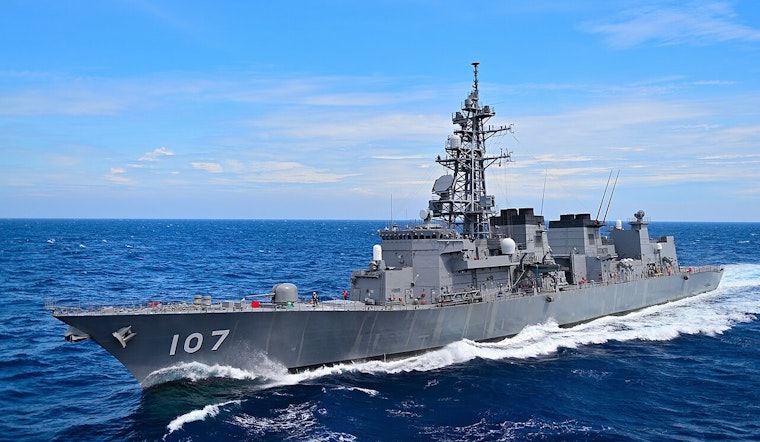
Beijing has lodged a formal diplomatic protest after a Japan Maritime Self-Defense Force vessel sailed through the Taiwan Strait on Friday, blasting the move as “a deliberate provocation” and warning it could further destabilize an already tense region.
The vessel was identified as the destroyer JS Ikazuchi, which China’s Eastern Theater Command said passed through the strait from 4:02 a.m. to 5:50 p.m., tracked the entire way by Chinese naval and air units, according to Global Times. Japan’s Self-Defense Forces declined to comment on the transit, as reported by the Honolulu Star-Advertiser.
What Beijing Said
At a regular press briefing, China’s foreign ministry accused Tokyo of staging “a display of force” and again labeled the destroyer’s passage “a deliberate provocation” that had “severely impacted bilateral relations,” according to statements carried by Global Times. The ministry said it issued a “strong protest” to Japan and stressed that the People’s Liberation Army had monitored the Ikazuchi’s movements throughout the day.
Backstory
The flap lands on top of months of rising friction after Prime Minister Sanae Takaichi said in November that a Chinese attack on Taiwan could, under some circumstances, trigger a Japanese military response. Coverage by the AP of those remarks prompted a diplomatic backlash from Beijing and helps explain why every move by Japan’s navy now gets close scrutiny from Chinese officials.
Why It Matters
Passages by foreign warships through the Taiwan Strait are both routine and politically charged. In recent months, vessels from Washington, London and Tokyo have all made similar runs, while Beijing has responded each time with its own naval and air patrols shadowing the transits. Reporting by USNI has noted that these close encounters increase the risk of miscalculation when ships and aircraft from rival militaries operate in the same tight space.
For now, this latest dispute remains confined to official statements and diplomatic protests rather than direct confrontation at sea, but analysts say the dust-up highlights how a single warship’s passage can send ripples through an already fragile security landscape. Coverage of the episode has drawn on wire reports and local media, including the Honolulu Star-Advertiser, and Chinese officials have signaled they intend to stay on high alert.





.jpg)