

























































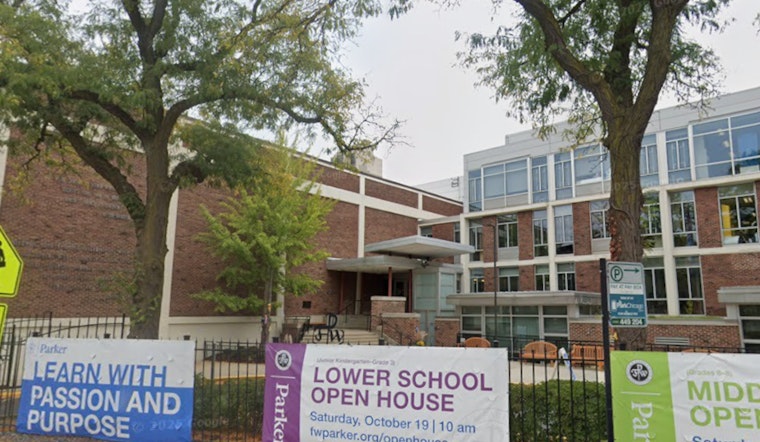
Lincoln Park residents packed into Francis W. Parker School’s auditorium this week and made it very clear they are not on board with the private school’s latest growth spurt. The proposed expansion would add classrooms, a pedestrian overpass, and new athletic field lighting, while also enlarging the campus footprint and boosting enrollment. School leaders are pitching it as a way to increase financial aid and add affordable housing. Neighbors counter that it would permanently alter a quiet stretch of Belden Avenue and erase homes that currently pay into the local tax base.
More than 200 people crowded into the public meeting at Parker’s auditorium at 330 W. Webster Ave., with roughly 30 neighbors lining up to speak, most of them opposed to the plan, according to Block Club Chicago. Speakers blasted Ald. Timmy Knudsen held the session inside the school itself and said Parker’s years of nearby property acquisitions have made them deeply skeptical of its long-term intentions. Residents raised alarms about heavier traffic, longer hours for bright field lights, and the future of older apartment buildings along Belden.
What the school is proposing
According to Francis W. Parker’s public materials, the plan calls for tearing down and rebuilding 327–335 W. Belden as a three-story academic building that would tie into the main campus with a low-profile pedestrian overpass. The proposal includes DarkSky-certified lighting for the athletic field, a phased enrollment increase of about 125 students over seven years, and a pledge to convert 2236 N. Clark into seven affordable units while keeping other Parker-owned Belden buildings as housing for at least 30 years. Those details appear in the School and Neighborhood Improvement Proposal, and Francis W. Parker School presents the project as intentionally designed to minimize disruption and preserve the neighborhood’s character.
Neighbors say the pitch felt one-sided
Most of the evening’s public comment zeroed in on what residents described as a tilted process and the potential fallout for people living nearby. “Parker’s expansion would make the school’s problem the community’s problem,” Jim Nichol told the crowd. Jeremy Kolpak argued that the night’s presentation was “a one-sided pitch” and called for a genuine civic discussion instead. Michelle Villegas said the gathering “felt unfair and rigged” and accused the school of pulling both housing and tax revenue out of the neighborhood, according to Block Club Chicago.
Knudsen convened the session and next steps
Ald. Timmy Knudsen (43rd) organized the meeting, and his office says it is still gathering comments from residents as the debate continues. Staff for both the school and the alderman framed the event as an early stage of public engagement, noting that any expansion will have to pass through multiple layers of city review and approval. Parker officials told attendees that, if the proposal clears those city hurdles, some field upgrades could be in place by next summer and work on the new classroom space could start around 2028, according to CBS Chicago.
City review, fundraising and neighborhood commitments
The school emphasizes that the whole plan hinges on successful fundraising and a sequence of city approvals. Renderings and descriptions highlight reusing architectural materials where possible and keeping student drop-off and pick-up activity off Belden with the help of the planned overpass. The proposal also underscores the DarkSky-certified lighting, which is meant to reduce light spill into surrounding homes, and reiterates the offer to create long-term affordable housing in one Parker-owned building as part of the overall package. Officials say they will keep meeting with neighbors while the city vetting process moves ahead, and they note that zoning and permitting decisions will ultimately shape the project’s timing and final design.
Legal and neighborhood context
The current blowback is not happening in a vacuum. Tensions trace back to earlier property deals: coverage from 2019 and 2020 detailed how Parker bought units in nearby Belden buildings, and at least one condo association later sued, accusing the school of covert purchases and a “hostile takeover” strategy. That fight drew attention from outlets such as The Real Deal and CBS Chicago, and it is a big reason some neighbors are coming into this latest proposal with their guard already up. For now, the expansion plan moves forward through additional community meetings and formal city scrutiny, where both residents and officials will get more chances to weigh in.





