

























































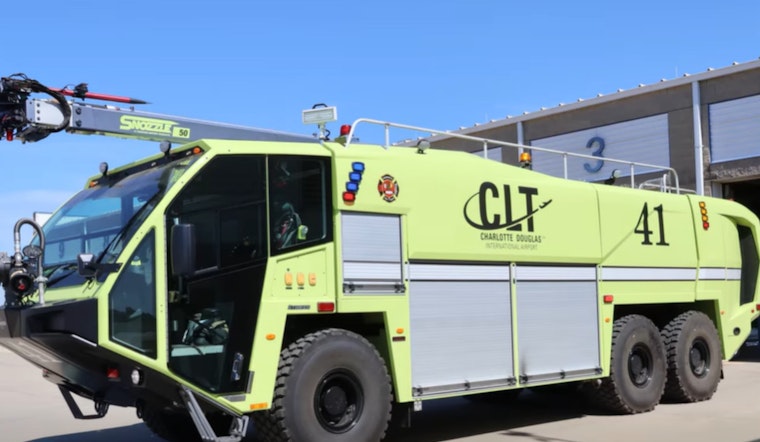
Charlotte travelers got a close-up look at the muscle behind their fire protection this week, as the Charlotte Fire Department dropped a short reel Monday featuring two of its airport rescue heavyweights, Blaze 2 and Blaze 41, rolling into service at Charlotte Douglas International Airport. The quick-hit video spotlights crews trained specifically for complex aircraft incidents and teases an upcoming recruitment window, doubling as both eye candy for aviation buffs and a reminder of just how much public-safety firepower sits on the airfield.
Posted April 13, 2026, the clip shows the large crash tenders pulling out from airport stations and underlines the department’s Aircraft Rescue and Firefighting capabilities. As seen in a Facebook reel from the Charlotte Fire Department, the rigs are framed as ready to roll on complex aviation emergencies at a moment’s notice. The post also notes that firefighter applications open May 15, 2026, nudging viewers toward a career move. New-hire academy training and benefits for recruits are laid out in city recruitment materials, according to the City of Charlotte.
Inside CLT’s Airport Rescue Response
Charlotte Douglas handled a record 58.8 million passengers in 2024 and ranks among the world’s busiest airports, which makes having serious on-field rescue capability non-negotiable, according to Charlotte Douglas International Airport. Department fleet lists and local records show that the Charlotte Fire Department and the North Carolina Air National Guard share responsibility for multiple “Blaze” crash tenders at the airport, including Blaze 2 and Blaze 41, which are set up for water, foam and PKW suppression as documented in en-academic.com. The units are stationed inside the airport perimeter so they can get to aircraft quickly, and joint staffing with the NCANG helps keep that coverage running around the clock.
Recruitment And Training Timeline
The reel also flags that applications for firefighter recruits open May 15, 2026, steering would-be responders toward the department’s hiring resources in a now-familiar outreach play. Charlotte Fire’s materials put heavy emphasis on physical testing, NFPA medical standards and academy expectations, and recruits spend months in paid training before getting their first assignment, according to the City of Charlotte. In practice, the short video works as a two-for-one: part safety showcase, part soft sell for people who might want to be the ones riding those trucks.
For travelers, nothing in the clip signals a change to normal operations or any recent incident on the airfield. It is a public-safety highlight reel, not a real-time alert. For more on how CLT handles emergency communications and which agencies take the lead during aircraft-related incidents, the airport outlines its approach in media protocols published by Charlotte Douglas International Airport.





