

























































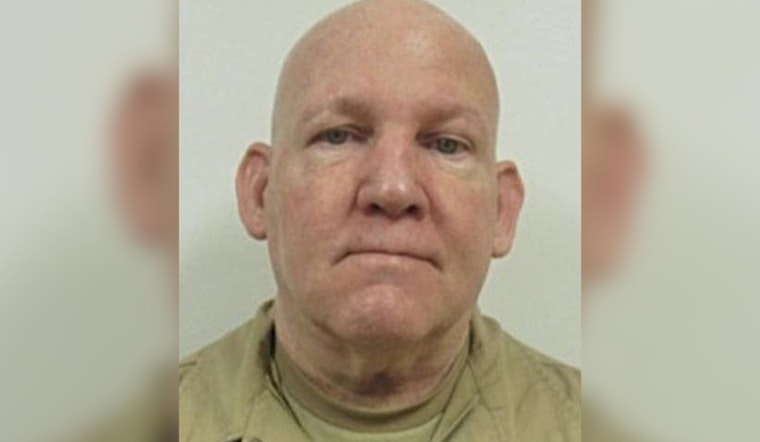
Borrego Springs is staring down a high-stakes court date in 2026, as county officials consider whether a designated Sexually Violent Predator will be allowed to move into a home on the edge of the desert town.
A public hearing is set for May 15 to decide whether Gary Snavely, a man with a long record in California’s Sexually Violent Predator system, can be placed in the community under conditional release. The Department of State Hospitals has recommended the placement, and the SAFE Task Force is gathering public comment ahead of the hearing.
County Notice And Hearing Details
According to the San Diego County Sheriff's Office, state officials want Snavely placed at 3406 Running M Road in Borrego Springs. The Superior Court has scheduled an evidentiary hearing for May 15 at 8:30 AM before Judge Daniel B. Goldstein.
The sheriff’s notice states that the SAFE Task Force and the District Attorney’s Office will compile public comments and submit them to the court. The formal public comment window opens today and runs through April 24.
Snavely's Record And Past Placements
Snavely has been in and out of state hospitals and on conditional release supervision for years, and he has already been at the center of several bitter placement battles in San Diego County. Proposals to house him in Jacumba and Julian drew intense community backlash and political pushback.
inewsource reports that Snavely was convicted in the 1980s of sex crimes involving children and later entered the state’s Sexually Violent Predator program, cycling between hospital confinement and consideration for release. Local coverage has tracked repeated attempts to find a placement site, and East County Magazine has documented petitions and formal objections that helped derail earlier plans.
How The Placement Decision Works
Under California law, when the Department of State Hospitals recommends placing an SVP outside the person’s county of domicile, the court must hold an evidentiary hearing to decide whether extraordinary circumstances justify that move.
AB 821 and related statutes spell out how neighbors are notified, how public comment is collected, and what kind of proof is required before a judge signs off. On paper, it looks tidy; in practice, it is often anything but.
The state’s own watchdog has flagged the challenges. In a review of conditional release placements, the California State Auditor found that community opposition and a tight housing market can delay placements, drive up costs, and complicate the CONREP program in counties such as San Diego.
How To Send Comments
The SAFE Task Force is accepting public comments between today and April 24. According to the sheriff’s office, residents can:
- Email comments to [email protected]
- Call in comments at (858) 583-7238
- Mail written comments to: SAFE Task Force, 9425 Chesapeake Drive, San Diego, CA 92123
The San Diego County Sheriff's Office notes that the court may allow oral comments at the May 15 hearing, depending on its procedures. The District Attorney’s Office and the SAFE Task Force say all timely comments will be included in their formal response to the court.
Local Reaction And What's At Stake
Previous efforts to park Snavely in small, rural communities have not gone quietly. Residents and local officials have raised alarms about child safety, the limited law enforcement presence in remote areas, and the strain on local services.
Coverage by outlets such as East County Magazine and inewsource has shown how small towns often find themselves walking a tightrope, trying to respect a court-ordered process while voicing deep unease about having an SVP as a neighbor.
Officials say the Borrego Springs case will help shape how San Diego County handles a controversial program that frequently looks to far-flung communities for placements.
What Happens Next
On May 15, the court is expected to hear testimony and review evidence on whether the proposed address in Borrego Springs meets legal requirements, and whether extraordinary circumstances justify a placement outside Snavely’s county of domicile. Judge Goldstein can approve the recommended site, modify the proposal, or reject it.
If a placement is approved, Snavely would enter the state’s Conditional Release Program, known as CONREP. The program is run by the Department of State Hospitals and contracted to Liberty Healthcare, which supervises treatment under tight rules that include GPS monitoring and regular status reports to the court.
The Sacramento County District Attorney's Office FAQ outlines the tools courts and supervising agencies have if something goes wrong, including mechanisms to revoke conditional release and return an SVP to secure custody.





