

























































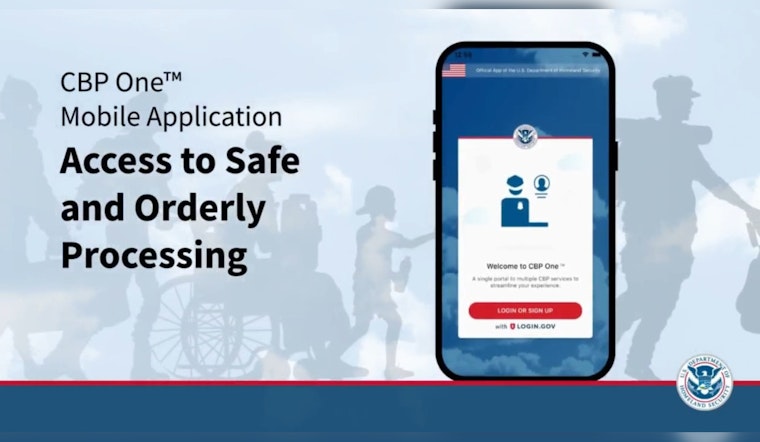
A federal judge in Boston on Tuesday ordered the Trump administration to undo mass revocations of humanitarian parole and work authorizations that had been issued through the CBP One scheduling app. The March 31, 2026 ruling delivers immediate legal relief to migrants who used the Biden-era tool, received termination notices last April, and stayed in the United States anyway. The decision arose from a class-action lawsuit filed in federal court in Boston.
Judge Says DHS Went Too Far
U.S. District Judge Allison D. Burroughs wrote in a 25-page memorandum that the Department of Homeland Security exceeded its statutory authority when it canceled parole en masse and must reverse those terminations. The opinion applies to migrants who used the CBP One app between May 16, 2023, and Jan. 19, 2025, and who were notified by email in April but remained in the U.S., according to The Boston Globe. In her written decision, Burroughs said the agency does not have “unfettered discretion to terminate parole.”
How the Cancellations Played Out
In April 2025, DHS blasted out a mass email to CBP One beneficiaries telling them, “It is time for you to leave the United States,” and gave recipients seven days to depart, the court noted. Tens of thousands of people who received the message had already left or been deported, and the terminations ultimately affected roughly 900,000 people who had been paroled in via the app, as reported by Reuters via Reuters Connect. The shutdown of the CBP One scheduling function came when the new administration took office in January 2025, AP reported.
Who Sued and Why
The case was filed in August on behalf of three women: a Haitian living in Massachusetts, a Cuban in Texas, and a Venezuelan in Ohio, along with the Venezuelan Association of Massachusetts. Democracy Forward and the Massachusetts Law Reform Institute represent the plaintiffs. In a statement, Democracy Forward called the ruling “a clear rejection of an administration that has tried to erase lawful status for hundreds of thousands.” The organization’s press release identifies the complaint as Sileiri Doe et al. v. Department of Homeland Security and lays out demands to restore parole and work authorization for the named plaintiffs and the putative class.
Legal Implications
Burroughs emphasized that parole, and the work authorizations that come with it, are granted for humanitarian or public-benefit reasons, and those reasons must be reassessed before parole is revoked. The court found DHS’s blanket terminations procedurally deficient and contrary to its own rules. That reasoning could make it tougher for the administration to attempt other mass revocations without individualized reviews, a point underscored in the court’s opinion and summarized by national reporters.
What Comes Next
The order restores lawful status for people still inside the United States who fall within its parameters, but it cannot easily undo the departures or removals of those who already left or were deported. The government can appeal the decision, and legal advocates urged anyone who received a termination notice to seek counsel. Messages to DHS were not immediately returned, The Boston Globe noted.




