

























































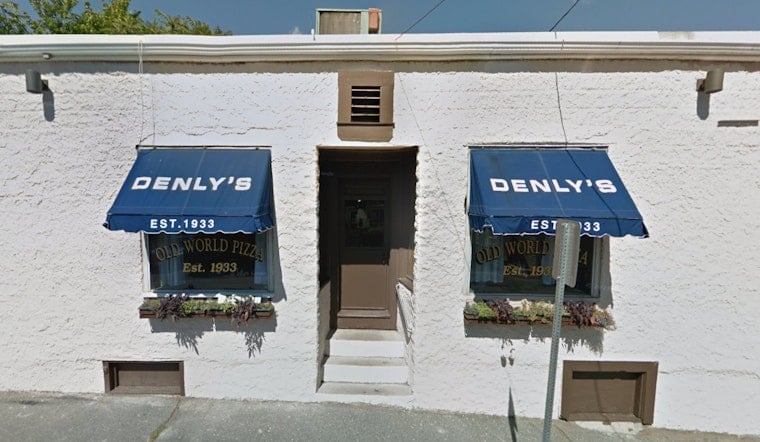
State police raided a 90-year-old East Weymouth pizzeria and found drugs stashed behind the counter, leading to the arrest of the restaurant's co-manager on cocaine trafficking and other felony drug charges. Jeremy Caruso, a 50-year-old Whitman resident who helps manage Denly Gardens Old World Pizza, was taken into custody Tuesday following a four-month investigation, and the shop has stayed open through the fallout.
Massachusetts State Police searched the family-owned restaurant at 25 Lake Street after detectives obtained warrants to arrest Caruso and search his home, car, and the restaurant itself, according to authorities cited by NBC Boston. Detectives said they established probable cause before executing the search warrant at Denly Gardens. Police reported finding drugs behind the counter of the pizza shop, including cocaine, ketamine, MDMA, Suboxone strips and pills, psilocybin mushroom bars, and THC vape cartridges and edibles.
Charges Span Nearly Every Drug Class Under State Law
The Norfolk County District Attorney's Office said Caruso was arrested Tuesday on several drug charges, and prosecutors say he is facing trafficking cocaine along with possession with intent to distribute MDMA, Suboxone, ketamine, psilocybin mushrooms, and THC. Under Massachusetts law, that lineup of charges touches nearly every controlled-substance tier on the books: ketamine is classified as a Class A substance, cocaine, MDMA, and Suboxone fall under Class B, psilocybin mushrooms are Class C, and THC products are Class D, according to the Jack Diamond Law Offices.
The trafficking charge carries the most severe exposure. Massachusetts General Laws Chapter 94C, Section 32E defines cocaine trafficking as knowingly possessing at least 18 grams with intent to distribute, and it imposes mandatory minimum prison sentences starting at two years for 18 to 36 grams and climbing to as much as 12 years for quantities above 200 grams, per Erkan & Sullivan, P.C. The Class B intent-to-distribute counts alone can bring up to 10 years in state prison or up to two and a half years in a house of correction under Chapter 94C, Section 32A, according to Justia Law, while the THC distribution charge falls under a separate statute carrying up to two years in jail for a first offense, per the Boston Criminal Lawyer firm.
Family Denies Allegations, Keeps Restaurant Running
Caruso pleaded not guilty at his arraignment last Tuesday and is due back in court next month. Cases stemming from Weymouth police enforcement typically run through Quincy District Court, which handles high-volume criminal dockets for domestic, traffic, and drug cases across local jurisdictions in northern Norfolk County, according to the Serpa Law Office.
Mark Caruso, who manages Denly Gardens alongside his brother Jeremy, said the family denies the allegations and stressed that his and his brother's sobriety are important to them. He said the business will remain in the community, and the restaurant has continued operating since the arrest. Billy Beradi, who worked at Denly Gardens, praised the Caruso family amid the case.
A Neighborhood Institution With a Viral Moment
Denly Gardens sits just outside Jackson Square in East Weymouth and has been serving pizza since September 1935, making it one of the oldest continuously operating pizzeria locations on the South Shore, according to local historical research shared on Facebook. The shop's profile rose sharply in January 2024, when Barstool Sports founder Dave Portnoy reviewed the pizzeria and gave it an 8.1 out of 10, a video that drew more than 800,000 views and brought in new customers, per a report from Rock 92.9.
The case also lands during a transition year for the office prosecuting it. Norfolk County District Attorney Michael W. Morrissey is retiring in 2026 after 16 years in office, and seven Democratic primary candidates are now competing for the open seat, according to CBS News.
The Legal Question Ahead: Who Controlled the Drugs?
Because the drugs were found behind the counter of a shared commercial space rather than on Caruso's person, prosecutors will need to prove what is known as constructive possession — establishing both that he knew the drugs were there and that he had the intent and power to control them. Defense attorneys frequently challenge that standard in workplace search warrant cases, according to Worcester Criminal Defense, and it is likely to become a central issue as the case moves through Quincy District Court next month.





