

























































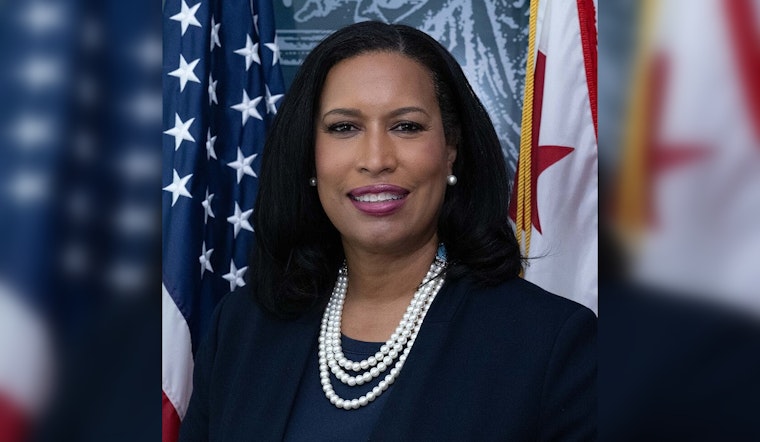
Mayor Muriel Bowser on April 10 pulled back the curtain on her proposed Fiscal Year 2027 budget, a plan that tries to plug an estimated $1.1 billion hole without jolting most taxpayers. The proposal keeps property and income tax rates where they are, delays a broader sales-tax hike Bowser had floated earlier and leans on targeted program cuts, one-time savings and narrower fee changes to get the numbers to line up. On top of a roughly $12.7 billion operating budget, the mayor is pitching an $11.2 billion capital plan that steers much of the long-term spending toward schools, transportation projects and WMATA.
According to WUSA9, the package leaves property and income tax rates untouched and raises only about $19 million through tax and fee changes. That same reporting notes that one of the few explicit tax moves is an increase in the sales-tax rate on medical marijuana from 6 percent to 10.25 percent, while the broader sales-tax hike Bowser had previously signaled is pushed off. The administration casts that choice as an effort to shield lower-income residents from more regressive increases while still scraping together some new revenue.
How the Administration Plans to Close the Shortfall
City budget writers are leaning hard on spending reductions, one-time savings and tighter budget controls rather than broad new taxes. A revenue estimate letter from the D.C. Office of the Chief Financial Officer warns that income and sales tax collections remain volatile and highlights risks tied to federal job losses and downtown office vacancies, which make forecasting tricky, according to the D.C. Office of the Chief Financial Officer. Budget analysts at the DC Fiscal Policy Institute say that this strategy shores up short-term stability but comes with tough trade-offs for social services and public school budgets.
Big Cuts, Few New Taxes
Bowser’s plan relies on nearly $500 million in program reductions and savings in FY27, plus another $340 million pulled from current-year savings, according to WUSA9. The administration says the operating budget comes in at roughly $12.7 billion, about 3.3 percent lower than in FY2026, paired with an $11.2 billion capital plan. All of that is balanced on top of roughly $19 million in net revenue from tax and fee tweaks. Taken together, the moves are designed to close the approximately $1.1 billion gap without touching core tax rates, which leaves little breathing room for new ongoing spending.
Reaction and What to Watch
Advocates and budget watchdogs argue that while the mayor’s approach keeps taxes stable, it risks carving into services that residents with low incomes depend on. The DC Fiscal Policy Institute has urged the D.C. Council to safeguard human services and school investments as it picks through the numbers. The mayor’s team, for its part, points to a citywide engagement process and budget materials released ahead of the proposal as evidence that the plan reflects what residents said they wanted, according to the mayor's office.
The D.C. Council will now stage hearings, mark up the plan and craft its own version before sending a final bill back to Bowser, after which the package heads to Congress for the mandatory federal review. Over the next several weeks, councilmembers and the public will hash out which cuts stand, which programs get a reprieve and where, if anywhere, new money can be found. Because D.C. budgets must clear a federal review period after local approval, advocates and officials alike note that the bottom line could still shift before FY27 officially begins on October 1.


_(cropped).jpg)