

























































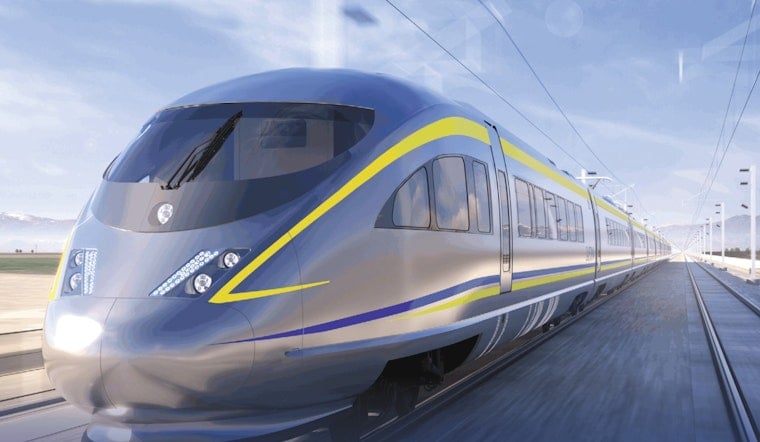
California’s latest right-sized vision for a San Francisco-to-Los Angeles bullet train trims what riders were promised while inflating the tab yet again. The new draft business plan pegs an optimized first phase at about $126 billion, warns that a fully built-out version could hit roughly $231 billion, and says visible work in the Central Valley is finally moving into track-laying this year. State leaders insist fresh funding and legal tweaks will keep the project alive, even as lawmakers and federal officials sharpen their pencils on the costs and the paperwork.
What the draft plan actually says
The California High-Speed Rail Authority’s draft 2026 Business Plan narrows early delivery to a shorter Central Valley stretch and leans on an early-revenue strategy that uses existing rail corridors and more basic stations. The agency says crews will begin laying track this year and is targeting train testing, then paid passenger service, between Merced and Bakersfield in 2033, with full Phase I service around 2040. Officials pitch this sequencing as a way to start bringing in fares sooner, then build out the broader system over time, according to the California High-Speed Rail Authority.
Two price tags and what they mean
The draft plan delivers a split-screen estimate: about $126 billion for an "optimized" Phase I and up to roughly $231 billion for an "unconstrained" version. The Legislative Analyst’s Office warns that the lower figure depends on a chain of scope cuts and legal changes that the plan does not fully spell out. Those assumptions, including long stretches of single track, shared Metrolink or freight corridors south of Palmdale, and smaller at-grade stations, would significantly reshape both ridership forecasts and the size of the funding gap, according to the Legislative Analyst's Office.
How Sacramento plans to pay for it
State leaders overhauled the funding picture in 2025 by extending California’s cap-and-trade program and dedicating roughly $1 billion a year to high-speed rail through 2045, a move officials say creates a more predictable revenue stream. This cap-and-invest reauthorization is central to the authority’s argument that it can draw in private partners or borrow to bridge timing gaps between spending and cash flow. The funding commitment and how the state is presenting it were outlined by the California State Transportation Agency.
Politics, critics and the federal threat
Republican state Sen. Tony Strickland has labeled the revamped plan unaffordable, echoing long-running GOP complaints that the project bears little resemblance to what voters thought they were approving. At the same time, the federal government has already moved to claw back roughly $4 billion in cooperative-agreement funding, a step that has raised the stakes on whether California can or should push ahead on the current timeline. Local and national outlets have tracked both the political backlash and the federal moves; KTLA reported on the reaction from lawmakers.
What happens next
The High-Speed Rail Authority has scheduled a vote on adopting the 2026 Business Plan at its April 29 board meeting, following a formal public-comment period that closed last Wednesday. If the board signs off, the plan heads to legislative committees and budget writers, who will probe the assumptions, the financing strategy and the statutory changes the authority says it needs. The adoption item appears on the board’s agenda, and staff on both the authority and legislative sides have already started dissecting the numbers, according to the High-Speed Rail Authority and related public materials.
For Bay Area and Los Angeles commuters, the most immediate shift may be a revenue-generating Central Valley line that officials hope will finally prove the project’s business case. A nonstop coast-to-coast trip remains a far-off promise. Over the coming months, Sacramento’s budget writers, the High-Speed Rail Authority board and federal reviewers will decide whether the latest version of "right-sizing" can actually fly or whether California’s bullet train gets reshaped yet again by politics and the bottom line.