

























































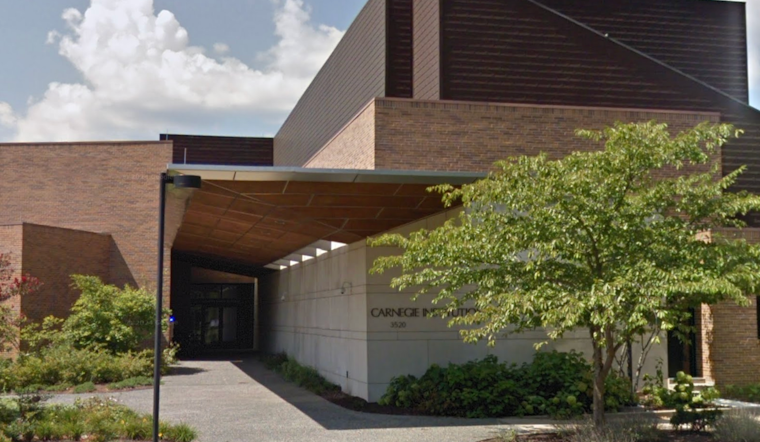
After more than 100 years tucked into a corner of Johns Hopkins' Homewood campus, a powerhouse of lab science is getting ready to leave town. Yesterday, Carnegie Science announced it will shut down its Baltimore facility and shift its biology and environmental research to Pasadena as part of an expanded partnership with Caltech.
Path to Pasadena
In a post titled "The Path to Pasadena," Carnegie Science said it plans to leave the campuses in Baltimore and Palo Alto and unify its biology research in Pasadena on the Caltech campus. The move was first detailed locally by the Baltimore Business Journal, which reported that the institute intends to vacate its Johns Hopkins building after roughly a century on the Homewood grounds.
A century of discovery
The Carnegie Department of Embryology was launched with Hopkins affiliation in the 1910s and grew into a longstanding center of developmental biology in Baltimore. Generations of scientists have passed through those labs, a history chronicled in detail by the Embryo Project Encyclopedia and other scholarly accounts.
Local labs, students and outreach
Carnegie's Baltimore operation has been tightly intertwined with Johns Hopkins research and training. Its scientists have shared projects, equipment, and trainees with Hopkins departments, and education initiatives such as BioEYES were run by Carnegie for years before moving into Johns Hopkins' Krieger School, according to the program site. The departure now looms over those day-to-day collaborations, with potential ripple effects on postdoctoral positions and K-12 outreach connected to the Homewood campus.
Why Pasadena
Carnegie leadership says consolidating in California is meant to sharpen interdisciplinary work next to Caltech, which formalized a life and environmental-science partnership with Carnegie in 2023. As Caltech described it, co-location in Pasadena is intended to help researchers work across institutions and fields. Carnegie has also sought state support for the buildout, including a $20 million allocation outlined in a Carnegie press release.
What comes next for Baltimore
The move will not happen overnight. Some Carnegie scientists already have lab space in Pasadena, and additional relocations are expected through 2025 and 2026, according to Pasadena Now. For Johns Hopkins, the slow unwind raises practical questions: what to do with the soon-to-be-empty building on Homewood, and how to preserve the training pipelines and collaboration networks that built up around the Carnegie labs over the last hundred years.



