

























































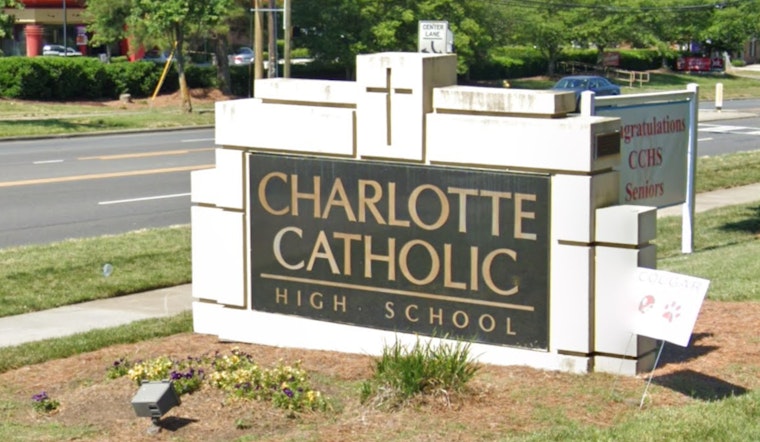
Parents at Charlotte Catholic High School say a priest went too far during confession last December, asking sexually charged and inappropriate questions of female students. Families say they alerted both school leaders and the Diocese of Charlotte, but the internal review that followed, which reportedly found no misconduct, has left them unconvinced. The clash has now widened into a broader fight over how confessions and pastoral care are handled for minors on campus.
As reported by WCNC, parents say the situation involved multiple female students who went to confession in December. Families raised their concerns with Charlotte Catholic administrators and the Diocese of Charlotte. Law enforcement was not involved, and WCNC notes the priest is not being named because there are no criminal allegations.
Diocese response and the bishop's letter
In a letter acknowledging the concerns, Bishop Michael Martin apologized that a daughter felt uncomfortable and reminded clergy that “priests are forbidden from talking about what was discussed in confession,” the bishop wrote. According to WCNC, diocesan officials told parents that confession is voluntary in Catholic schools and students are never required to participate.
The diocese said it did not find violations of conduct policies but has provided mentoring and reiterated to clergy the importance of pastoral sensitivity. That conclusion, though, has not cooled tensions with some families, who say the response feels more like a quiet course correction than a serious reckoning.
Parents pressing for a broader review
Parents say a diocesan review that clears clergy behavior is not enough without stronger oversight and clearer safeguards around confessional settings involving minors. Families told local reporters they want an independent or broader review and more transparency about what steps the school and diocese will take to prevent similar experiences.
Several parents say they plan to keep pressing school and diocesan leaders until they see policy changes or more explicit protections for students spelled out. For them, this is not just about one priest, but about how vulnerable moments in a confessional are handled when teenagers are involved.
Why confession rules and preparation matter
The U.S. Conference of Catholic Bishops notes that young people are often encouraged to complete an examination of conscience before confession so the sacrament is a formative, not confusing, experience for teens and young adults. See the USCCB guidance for young penitents here.
At the same time, the seal of confession is treated as absolute in Catholic law: the Vatican’s glossary defines it as a strict, inviolable duty that forbids a confessor from revealing anything learned during the sacrament. Vatican resources spell out those protections and their weight in canon law, underscoring why church leaders tread carefully whenever confessional practice is questioned.
What comes next
Diocesan officials say they have reiterated pastoral-sensitivity guidance and provided mentoring to clergy. Parents counter that this falls short of the broader review and structural safeguards they are seeking.
It remains unclear whether the Diocese of Charlotte or Charlotte Catholic High School will move beyond internal mentoring or revisit policies more publicly. For now, families say they will continue to push for accountability and clearer protections for students, and the episode has left many in the school community unsettled about where the boundaries of pastoral care should be drawn when it comes to minors in spiritual settings.




