

























































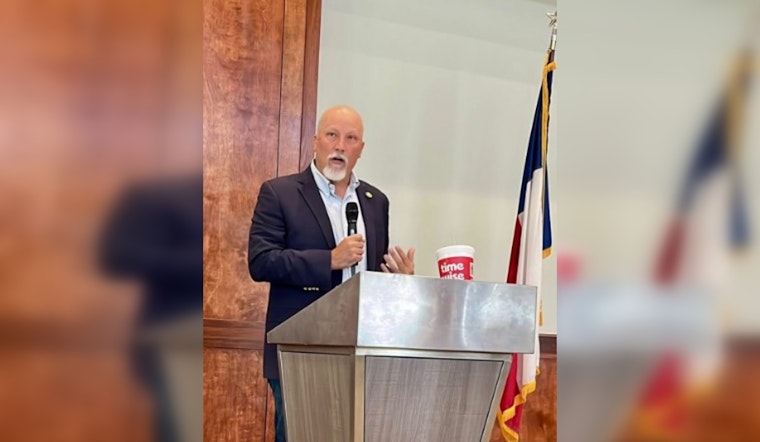
U.S. Rep. Chip Roy has put Travis County District Attorney José Garza on the clock, blasting the Austin prosecutor in a sharply worded letter and giving him until April 17 to hand over internal policy documents. Roy's office says the move is rooted in an August 2023 memo and a string of administrative errors that critics argue let risky defendants walk. The dust-up arrives after months of local reporting that has zeroed in on missed indictment deadlines and bond reductions in Travis County.
Allegations in Roy’s letter
Roy's letter, first detailed in national coverage, leans on an investigation that claims the Travis County DA's office "dismissed or rejected" about 12,700 felony charges during Garza's first two years in office. That tally reportedly includes more than 3,600 violent, sexual, or weapons-related cases, as well as a notable jump in property crime. Roy also flags an internal memo he says instructs prosecutors to factor in collateral consequences like housing and immigration status when deciding how to charge. Those specifics surfaced after Roy's staff circulated the letter to reporters, according to the Daily Caller News Foundation.
What Roy is asking for
In the letter, Roy gives Garza until April 17 to turn over "full copies of all policy directives issued since 2021" and to spell out how the office decides charges for serious crimes. Local reports note that the demand follows a recent mass shooting and comes amid broader complaints that internal management choices are reshaping who actually ends up in court. As the Tampa Free Press reported, Garza had not formally responded to Roy's letter at the time of publication.
What's in the August 2023 guidance
Roy zeroes in on an August 15, 2023 memo that, according to documents released with the coverage, tells prosecutors to weigh a defendant's age, housing stability and potential immigration fallout when deciding both charges and possible sentences. The memo reportedly cites research on frontal-lobe development for people younger than 25 and describes incarceration as often the "least effective means to rehabilitate" some defendants. Excerpts and explanation of the memo were published alongside reporting on Roy's letter by the Daily Caller News Foundation. Daily Caller News Foundation.
Local investigations and missed deadlines
While Roy focuses on policy, local watchdog work has tracked the nuts and bolts of case processing. Independent reporting has documented how missed grand-jury intake deadlines can lead directly to the outcomes Roy is attacking. Joint investigations by area outlets counted hundreds of blown 90-day windows for jailed defendants, including one review that found 263 missed deadlines in 2024, and highlighted cases where judges cut bonds or released defendants after prosecutors failed to indict in time. The Houston Chronicle pulled together that watchdog reporting along with the procedural changes the DA's office said it adopted to tighten intake and grand-jury practices.
Named examples cited by Roy
Roy's letter also walks through specific cases to make its point, including one situation where he says a murder suspect's bond dropped from $1,000,000 to $1 after prosecutors missed an indictment deadline. The congressman calls out Kanady Arkangelo Rimijo by name. Local stories from May 2024 linked Rimijo to arrests tied to an undercover operation that followed a surge in suspected overdoses that generated about 79 emergency calls in a short window. Background on that overdose sweep appears in coverage from FOX 7 Austin.
Garza's office response and context
Garza's office has publicly defended its record on violent crime and has criticized what it describes as oversimplified narratives, even as it acknowledges reviewing intake procedures in response to watchdog findings. On its website, the office highlights victim-centered policies, updated sexual-assault data reports and a gun-violence prevention plan that it says shifts resources toward serious offenses and survivors. Recent news releases from the DA describe ongoing internal reviews meant to ensure that in-custody cases reach grand juries within statutory time limits. More detail is available on the Travis County District Attorney site. Travis County District Attorney.
Legal implications
Behind the political fight sit some very specific Texas rules on timing. Article 17.151 of the Texas Code of Criminal Procedure requires either release on personal bond or a bail reduction if the state is not ready for trial within 90 days of a defendant being locked up, and related timelines, including the next court term or 180 days, can force dismissals if there is no good cause. Those statutory clocks are what drive many of the bond cuts and release motions that critics highlight. The law and its annotations are posted on the state statutes website. Texas Code of Criminal Procedure, Chapter 17.
Roy's letter adds federal-level pressure at a moment when local journalists and elected officials are already probing how Travis County moves cases through the system. With the April 17 deadline looming, whatever comes next, whether a detailed response, a document dump or a public hearing, is likely to shape the next round of debate over the DA's policies.





