

























































Editor's Note: This article has been updated to reflect revised material descriptions from the project team.
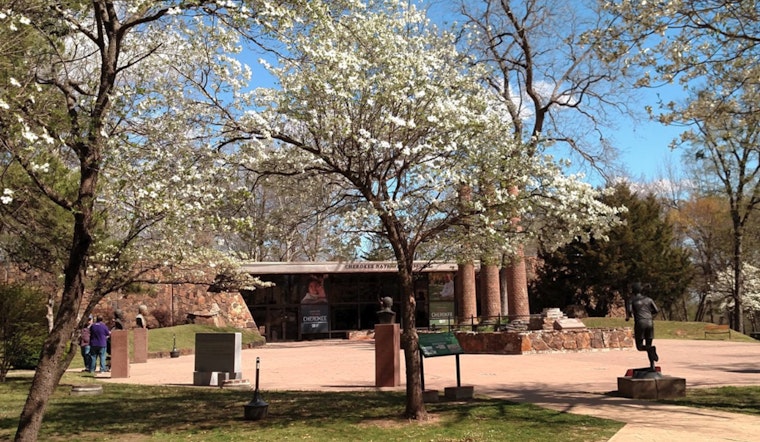
Moshe Safdie’s firm has rolled out a new vision for the Cherokee Heritage Center in Tahlequah, turning the 43 acre campus into a low profile cluster of pavilions tucked into the tree line and tracing a crescent shaped, rainwater fed creek. The design keeps key historic elements in place, including the surviving columns from the old Cherokee Female Seminary, while pulling exhibition, educational and genealogical spaces, communal areas and a research hub into a landscape first plan. The existing Heritage Center, founded in 1967, has been closed since 2020 while the Cherokee Nation works through a long term redevelopment strategy.
A campus shaped by water and trees
Safdie Architects says the scheme grew out of a multiyear collaboration with the Cherokee Nation and is meant to change how visitors move through and experience the site. According to Safdie Architects, the plan weaves together museum galleries, genealogy resources and communal gathering zones while keeping the buildings visually and physically embedded in the existing landscape. The firm also released a short video, produced with the Nation, that walks through the design intent in more detail.
Pavilions, paths and a rainwater creek
The proposal lays out the campus as a chain of pavilions set into the woods and aligned with a newly introduced crescent shaped creek, with one taller pavilion rising above the trees as a clear visual marker on the site. As reported by Archinect, the creek is planned as a rainwater fed feature that ties together native planting, walking paths and outdoor exhibition elements across the grounds. The circulation is organized so that visitors approach and discover the buildings gradually, meeting each pavilion in sequence rather than confronting a single, front facing entry.
Material palette and project team
Renderings show warm, earth toned facades and deep, textured walls. Designboom describes the main material strategy as layered, horizontal bands of earth-toned materials that visually and physically ground the structures in the soil. The outlet also names Anishinabe Design as architect of record and lists PWP Landscape Architecture, Wallace Design Collective, Buro Happold and HSA among the consultants on the project. Daylight is shown entering primarily through skylights and carefully framed openings, cutting into the thick walls to create softly lit interior spaces.
History stays front and center
At the literal and symbolic center of the plan, the preserved columns from the original Cherokee Female Seminary are folded into a new central gathering space, maintaining a direct physical tie to the site’s earlier institution. The landscape concepts also connect to existing cultural installations on the property, including the reconstructed Diligwa village and the Tsa La Gi amphitheater. The National Park Service describes those features as anchors in the Heritage Center’s broader cultural landscape.
What it means for Tahlequah
The Cherokee Heritage Center’s own website currently lists the site as "Temporarily Closed" while future plans are developed, and tribal leaders have been pursuing a phased redevelopment approach for several years. The tribe’s council has previously backed a multi million plan for a new center, and local reporting has noted an authorization of roughly 50 million dollars connected to earlier planning approvals for the project. The closure status and broader context are outlined on the Cherokee Heritage Center website and in recent coverage from Cherokee411.
Safdie Architects announced the design on April 20, 2026, releasing visuals credited to Mir. Tribal leaders and the design team say more detailed phasing and scheduling information will come as the project moves from concept into permitting and, eventually, construction. For now, the scheme plants a clear flag for what comes next: a cultural campus that intends to root future programming in the land itself and in Cherokee history.




